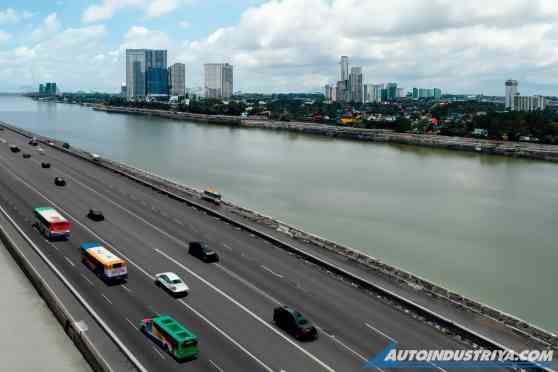
What we gained (and what we lost) when RSA canceled PAREX

No PAREX: What gives, pare?
When San Miguel’s Ramon S. Ang (RSA) speaks, the country listens. We’re not really talking about beer or the red hotdogs, but rather when it comes to where he is taking the company when it comes to infrastructure.
But this time, it’s the other way around: the public is speaking, and RSA is listening.
In a recent press conference, the CEO of San Miguel Corporation (SMC) announced that he has decided on whether to proceed with the controversial Pasig River Expressway (PAREX) project. And the answer is no, that will not push through.
In 2021, San Miguel made the announcement that they had reached an agreement over a PPP (public-private partnership) expressway as part of the previous administration’s Build! Build! Build! program that will run from east to west, connecting R-10 and C-6. It was to be a radial tollway that would provide a direct link between the City of Manila and Taytay as well as all the cities and municipalities in between, and will allow a connection to the Skyway 3, among others. They even went so far as to hold a groundbreaking event in Pandacan in September 2021.
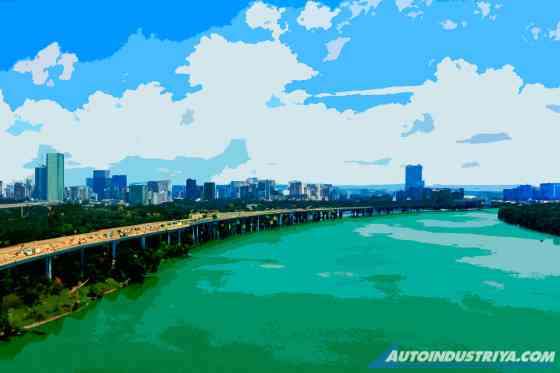
The 2021 announcement was not well received by everyone. The controversial part about PAREX is that most (if not all) of it would have been constructed atop pillars on the banks of the Pasig River. There was an outcry from several groups over the environmental impact of the construction of such a project on the ecology of the Pasig River, as well as the impact it could have on the many treasured heritage sites along the way.
Initially, SMC’s CEO was quick to try and assuage legitimate concerns and dispel the rumors and misinformation about the project, but it seems he has already decided that it wasn’t worth the stress. PAREX is no more.
The problem here is the alignment to run alongside and/or on top of parts of the river. If we are talking about preservation, then it is most definitely a win. Such a large-scale construction project would undoubtedly have an impact on the river’s ecology even though SMC pledged they would minimize the impact. As to what the impact would have been exactly, we can only base on forward-looking studies: construction debris, constricting parts of the river, pollutants such as tire rubber particles (if the road was completed), and that parts of the waterway will not get as much sunlight as before.
Why was this the one chosen? Quite simply it is the most cost-effective way to do it as the river and its immediate banks are mostly state-owned. As such, ROW or right-of-way acquisition isn’t going to be as big of a challenge versus if the road was constructed over areas already with homes, condominiums, malls, factories, warehouses, and the like. The ROW in such a case would have sent the costs to the moon.
SMC has a lot of recent experience with this after the construction of the Skyway 3 which had to be re-aligned several times because of ROW or right-of-way. There would have been some parties along previously proposed alignments that would not sell their lands, and securing ROW would have cost more. That’s also why certain sections of Skyway 3 are over sections of waterways and above existing or defunct PNR lines but still ended up costing over PHP 66 billion based on the last tally we found.
So what did we lose and gain by that decision to cancel? By not pushing through with PAREX, there will be no impact on the ecology of the Pasig River. There will also be no impact on heritage sites along the alignment.
Unofficially, one of the other probable reasons that the project was also canned was to make way for the rehabilitation and beautification projects planned for the banks of the Pasig River. In January, a section of the river around the Manila area was cleaned up and lit up, showcasing a space for people to gather and relax. They got the support of an architectural firm to do the planning and design work, and to expand it to the other areas along the Pasig River. There is also a plan to launch a revitalized ferry service along the river's length.
By keeping the status quo, such a project can be prioritized for the beautification of the area. The problem is that the status quo is not looking good from a mobility standpoint.
Over the last few decades, a lot of families have moved east to Antipolo, Cainta, Binangonan, Taytay, and Angono because property costs and rent are lower. The problem is that many still need to head to Metro Manila to work, do business, go to school, and the like. Those people need mobility, and it takes just one look at Google Maps satellite overlay to see: most roads in the east lead to either Ortigas Extension or to Marcos Highway. As someone who literally lives in between those two primary roads, I can tell you that the situation is very strained.
Adding a third corridor would have given people an alternative to choose if they so wish. Given the toll fees, PAREX won’t be for every motorist, but just the mere fact that it could get hundreds (possibly thousands) of cars, buses, and vans off Ortigas and other streets in Taytay, Cainta, and Pasig can only be good. And being away from existing primary radial roads likely means construction wouldn't have had a big impact on the already delicate balance of traffic wherein all it takes is one accident to upset everything.
PAREX (and even Skyway 3) has been tagged in social media as some kind of issue or struggle between rich/poor or drivers/commuters or us/them. Many voiced their concerns over the prioritization of projects such as PAREX and argued that mass transit projects like rail must take priority.
It’s not a matter of one before the other but all at the same time. It's not really a private corporation's task to build roads, trains, and airports; for those, elected leaders are the ones to look to in order to urge such projects along. Still, it seems SMC is willing to invest to do it. They're already building MRT7 on Commonwealth, a new airport along the bay in Bulacan, an expressway to Bicol, and more.
The PAREX proposal would have already incorporated certain features like a dedicated bike lane, walkways, and even a purpose-built bus-rapid transit (BRT) system from inception. Looking at the route of the river, that would have given a direct bus link to Ortigas CBD, BGC, Makati, and even U-Belt without using Ortigas Avenue or EDSA. That would have given us eastern folk a good alternative to commute on.
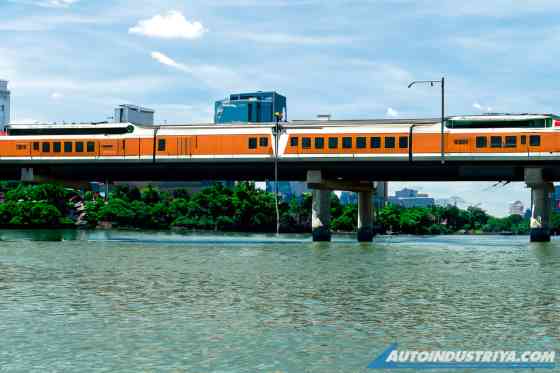
So for now, the only thing we in the east can look forward to is the MRT4 project: an elevated train over Ortigas Extension from Taytay to Ortigas EDSA that will also begin construction. That one is a government project, and they're seeking loans assistance from the ADB and AIIB among others as the total project cost is about USD 1.792 billion or PHP 100 billion. This would be a game changer if the 2028 opening date goes to plan as it is projected to have a daily capacity of 400,000 riders.
The concern here is that MRT4 only goes to EDSA (which already has a strained MRT3 and Busway) and doesn't continue to Greenhills or even to link directly with the LRT2. And also, it's already the end of Q1 2024 and construction hasn’t even really started apart from reports of soil tests being done along the MRT4's alignment. Unless there are some invisible pillars already erected along Ortigas Extension that we cannot see with the naked eye, it hasn't progressed yet. And imagine the traffic when they do begin.
So status quo it is and SMC will hold back on PAREX indefinitely, or maybe it’s totally canceled. I can only imagine what was going through RSA’s mind because this is the first I’ve heard of an RSA infra pet project that will be canceled. I think he felt the stress, so why bother? Kung ayaw, edi huwag.
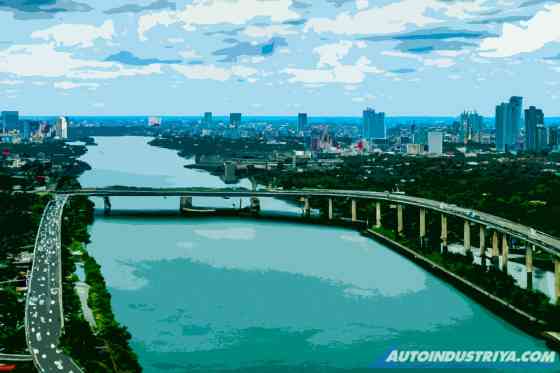
The cancellation is a shame because PAREX could have made a positive contribution to a serious transport problem that everyone is feeling now. Skyway 3, while a premium alternative, gets thousands of vehicles out of other main roads like EDSA. MNTC's NLEX connector will also play a very important because it will be an elevated expressway that can be used by trucks; that means trucks can easily drive to and from the port area via NLEX Harbor Link and stay off the ground level when traversing through most of Metro Manila.
The reality is while rail is indeed the way to go, the roads need to bear the brunt until new trains get on track. The immobility we feel now is the result of decades of fast population growth, inaction on infrastructure investment, a lack of urban planning, petty politics, corruption, and more. And it matters not whether you're on a jeep, on a ferry, in line for a train, driving personal cars, waiting in line at an airport, riding a motorcycle, pedaling a bike, or even just walking: time is the resource that is wasted for everyone, and that cannot be reclaimed.
That's not the private sector's function to make an impact on those things, but someone has to pick up the slack. PAREX would also have been at no cost to taxes because SMC would be footing the bill. Yes, there would have been an environmental impact that cannot be avoided, but it can be minimized and corrected as RSA had promised. Don't they deserve the benefit of the doubt on the pledge given that SMC has already been single-handedly spending billions cleaning the very rivers that we ourselves litter?
I’d love to read your thoughts on this in the comments. I’m sure there are many good points to ponder over a bottle of ice-cold Pale Pilsen.