War, Peace, and BEVs

Is driving electric the solution?
The geopolitical situation involving the superpowers is fascinating to watch and study, especially from the eyes of a student of political science.
Russia invaded Ukraine in what may seem to be about ideology or reunification, but it is probably more about controlling big chunk of the world’s grain and resources. China does want to reunify with Taiwan, but it is probably more about breaking the naval containment to gain free access to the Pacific. America, on the other hand, wants to still be seen as the leader of the free and democratic world, but wages war and uses the military to flex their hegemony because it is in their interest to keep the wealthy empire they had built over the last 80 years by any means necessary.
Indeed, we live in fascinating times when these superpowers (with matching egos at the helm) aim to make their mark felt and be the dominant player in the globe. The problem is when they fight economically, diplomatically, or even militarily, the rest of the world feels it. Something that is especially true now, with fuel prices already starting to look like the report card of an honor student.
It does bring up some very serious concerns for the world of mobility, as the vast majority still depends on black gold. And right now, it’s not flowing out of the Strait of Hormuz.

I can’t even begin to tell you about the sheer number of friends and family that have DM’d my inbox to ask about this BEV or that BEV. I’m getting questions about the difference between HEV, PHEV and REEV. There are questions whether the range figures are true, or if it’s really cheaper to run and maintain a BEV when compared to ICE.
As such, I expect dealers of BEVs and PHEVs to run out of stocks very soon, if not already. Many are now in the process of selecting a vehicle that can manage their daily drive and grant magical immunity to the oil shock that is upon us. And that’s perfectly fine, as there are plenty of great BEV and PHEV options in the market today across all price brackets.
If you can insulate yourself from the gas and diesel price shock that is already upon us, then good for you. Even when it comes to cooking, I’m looking at that induction stove I have in the storage room because even LPG is going to have a huge spike.

What I’m finding odd is the jubilation online by some proponents of EV adoption. Let me be clear: the impact of the conflict isn’t being felt yet because it will be across the board. Wait for the effects of the oil spikes to kick in after all businesses that supply basic goods and services recompute to account for it. Don’t want to drive out and have lunch delivered by motorbike? Think food prices are high now at the public market or airconditioned supermarket? You think Shopee or Lazada can sustain free delivery vouchers with fuel prices as they are?
Maybe owning a BEV or PHEV may seem like a great way to insulate oneself from the oil shock from US-Israeli war on Iran in the short term, but it’s not a perpetual shield. Yes, you can install a AC charger to get about 7 kW of charging speed at home. Some can look into a DC charger install at home, but both are big investments and complex undertakings. You don’t plug those in; you wire those in. And before you can do that, you have to call the power company to verify if the current -no pun intended- lines in your area can handle it.
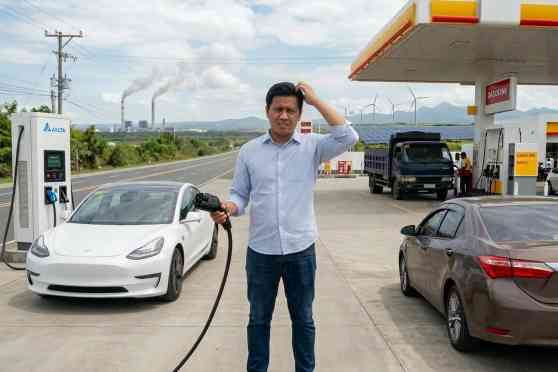
Some would think: hey, I’ll just charge at the malls. Sure, that’ll work but expect long lines because the sudden influx of BEVs in owner’s hands will put a strain on existing public charging infrastructure. The fact is charging infrastructure cannot support mass BEV adoption yet; it is expanding, but isn’t there yet by any stretch of the imagination. If I felt it was, I would have switched months ago. That’s why we always advocate you should honestly evaluate if your lifestyle, location, and driving habits can support EV use.
And then there’s the source of the energy. Our nuclear plant never got running, solar isn’t enough, and neither is wind. We rely heavily on coal; about 60% to 63%. Coal isn’t oil, so it shouldn’t be affected right? Not true: sources vary, but about 80% to 98% of our coal is imported. That means ships that need oil to make those deliveries. And even if there’s a massive investment program to expand solar and wind, those components are also imported and have to be brought to the locations to be installed by vehicles that run on diesel.
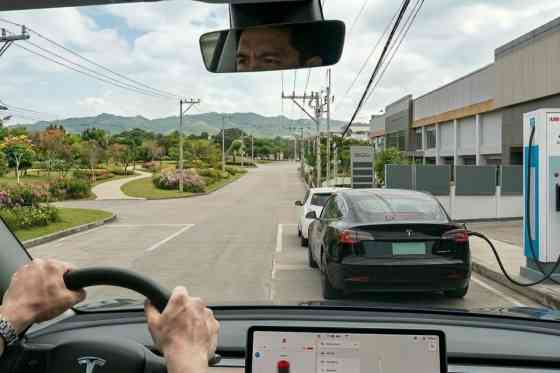
Speaking of diesel and charging infrastructure: have you ever noticed why large public establishments that run EV chargers in the parking lots like malls regularly run their generator sets during the hottest hours of the summer months even if there’s no blackout? That’s called the Interruptible Load Program (ILP), and they do it because they’re asked to in order to take load off the grid to keep the lights on for everyone. Those generators run on now-expensive diesel, the cost of which is compensated for by the distribution utility provider (Meralco, not government).
For friends that are looking at a BEV or PHEV because of the war, take note: it is not a short term thing and there are a lot of factors to consider. But I'm sure you've already thought that through. The real concern is on the other side.
Right now, automotive companies are experiencing a sudden surge of BEV and PHEV demand. It must feel like manna from heaven, and it's time to capitalize on it. The problem is that it is a double edged sword: as sales grow, the demand on aftersales grows too. It's easy to sell a car, but it's harder to keep all those customer cars running or repaired if something happens. Brands must ensure they have the service capacity necessary, operational charging stations at all dealerships, and most importantly the parts.
One common aspect -expecially among Chinese automakers- is to hold off on ordering parts until they are already needed, and by then it is too late. Many new brands tend to focus on sales but procrastinate on the needs of aftersales. You need to have parts to keep the vehicles of customers operational, especially collision parts that many automotive distributors/national sales companies/subsidiaries tend to put on an order-only-as-needed basis. If those parts are hard to come by even when there is no conflict in the world, imagine the difficulty when there is. Actually, we don't need to imagine anymore.
Automotive importers must invest to have those bumpers, hoods, headlights, motors, EV batteries, and other critical parts in stock because logistics/shipping delays are unacceptable to customers that rely on your vehicle as their sole means of mobility. Automotive brands must show that they have learned from the customer experiences from a once-popular Chinese auto brand from 3 years ago.
Either way, it doesn’t matter what you drive because we are royally f*cked as a whole. Some are just less f*cked than others. There is nothing a consumer can do about the impending rise of consumer goods, commodities, utilities, and everything else, but we can be smarter about consumption. Minimize trips by planning smartly. Cook more, order less. Drive gently, and leave the aggression in the comments section. Just kidding.
The best we can really hope for is an end to the foolish war started by a silly leader against a country that was busy minding its own business, all at the behest of a regime that can’t seem to find common ground for peace with its neighbors.