2026 Subaru Forester e-Boxer Hybrid 2.5L CVT

- Make: Subaru
- Model: Forester e-Boxer Hybrid
- Engine: 2.5L DOHC 16V I4 + Electric Motor, Li-ion battery
- Max Power: 197 PS (combined)
- Max Torque: 276 Nm (electric motor)
- Transmission: CVT with 8-speed Sport Mode, AWD
- Price as Tested: ₱2,498,000
8/10
7/10
9/10
8/10
6/10
7/10
Entering the green era
Recently, there’s been a growing trend among people making small but meaningful lifestyle changes – most especially with millennials and Gen Zs.
You see people trading their late nights out for early morning workouts, entering different kinds of fitness eras like running, pickleball, badminton, pilates, or the good ‘ol gym session. It’s really nice to see more people being more aware of their health, cutting back on bad habits, and finding a better balance.
In a way, I can see that same mindset is showing up in the cars we drive nowadays.
Take the Subaru Forester, for example. For many years and generations, the Forester has always been that rugged compact crossover SUV that drives well both on and off the road, but it’s also always had a bad habit – its thirst for fuel.
This latest generation with the e-Boxer hybrid system, however, has learned to be a little more mindful about its drinking problem. Let’s see if that change has made the Forester go from good to great.
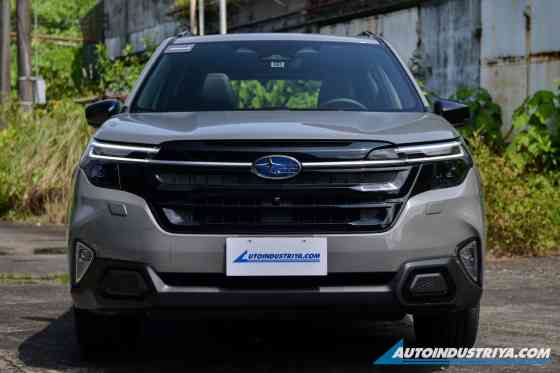
Looks-wise, I still don’t think the Forester was designed to win beauty contests, but rather give out an impression of a rugged and capable crossover SUV. It’s like a pair of ON Cloud shoes compared to a pair of oxfords. The latter does look good, but which of the two would you choose to wear every day, right?
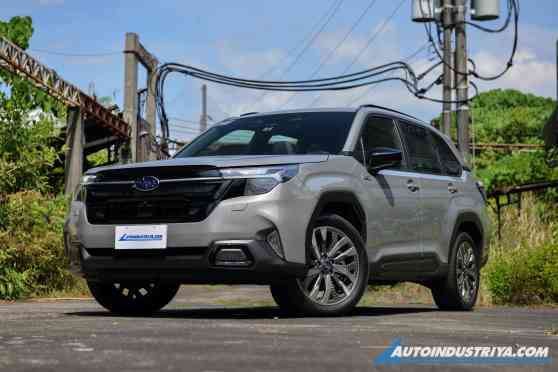
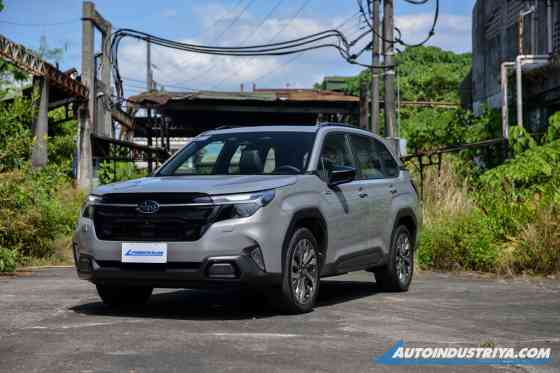
The front end features a large grille that links with the headlights on either side of it as one big fascia piece, while the side profile shows Subaru is still fond of body cladding. The boxier profile, however, and the pronounced fenders give it a more confident stance, while the 19-inch wheels and 220 mm of ground clearance ensure the underpinnings are well elevated from scraping.
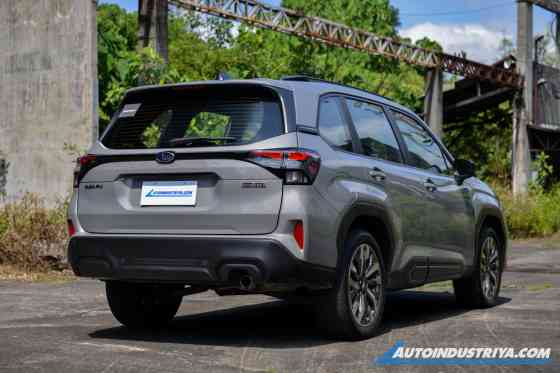
At the rear, the taillights are trapezoidal in shape and are linked by a horizontal black trim, which kind of reminds me of the Toyota Veloz, to be honest.
If you’ve ridden some of the current Subarus like the Crosstrek or the WRX, then getting in the cabin of the sixth-gen Forester will feel very familiar. It’s up to you to treat it either as a good thing or a bad thing, but the layout is the same for the dashboard, albeit with better textures and trims with soft padding and the use of high-quality leather.
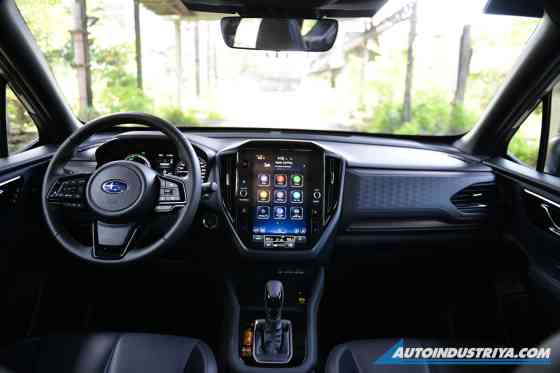
That said, the Forester hasn’t completely come over to the digital side with the gauges still in analog, separated by a multi-information display. The infotainment system is easy to get to grips with, thanks to the relatively simple menu layout.
Speaking of sensibility, it also shows with the air-conditioning and heating controls being permanently on the screen, so they can be accessed at all times rather than via a submenu. There’s still a physical volume knob and buttons for cabin temperature controls, too, so it’s easier to adjust those while on the move. In addition, it has a good reversing camera, and the Apple CarPlay and Android Auto smartphone integration is simple and no-nonsense.
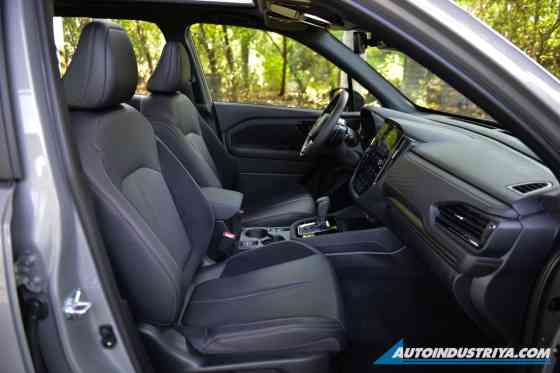
Subaru has also equipped the Forester with a Harman Kardon sound system, so the listening experience on the road is excellent. Other features like a wireless charger, multiple USB ports, rear A/C vents, and a panoramic sunroof add to the list of the Forester’s functional toys inside.
As is typical with models underpinned by the Subaru Global Platform, the Forester feels airy inside with lots of headroom, along with decent legroom and elbow room for both the first and second rows.
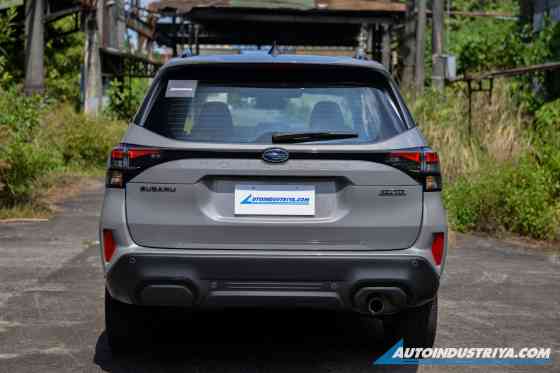
For cargo space, our measurements show the Forester could carry items up to 36 inches long, 43 inches wide, and 32 inches tall with the tonneau cover rolled up, while the one-touch folding mechanism for the second row can expand cargo length to 61 inches. There’s a bit of cargo height compromise, however, because of the battery underneath the compartment floor, which leaves no room for a spare tire anymore. For those planning to venture to the outdoors with the all-new Forester, that’s something to take note of.
Subaru already made a mild-hybrid Forester in the previous generation, but Motor Image Pilipinas did not offer one here. Somehow, Subaru PH dodged a bullet in that one; however, since the efficiency gains in that e-Boxer system didn’t quite deliver the expected improvements.
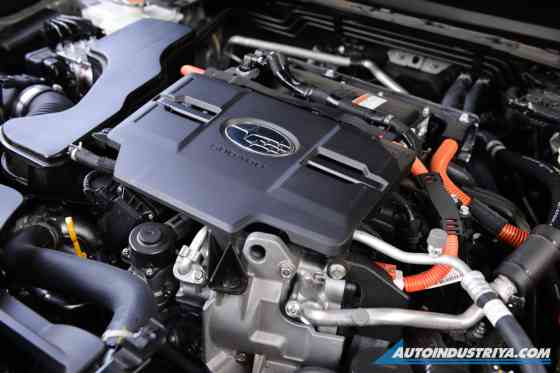
The all-new Forester, on the other hand, has a 2.5-liter, naturally aspirated Boxer engine in an Atkinson cycle, and features the brand’s Strong Hybrid system, in which Subaru partnered with Toyota and utilized the latter’s hybrid components, making it a full hybrid. It produces 197 PS and 276 Nm of torque, and is still paired to a Lineartonic CVT driving all four wheels.
I’ve had plenty of experience with the Forester e-Boxer on a long drive, but driving it as my daily for a week has made me appreciate its newfound efficiency more. It's very good at being a hybrid at low speeds, as there’s lots of EV-mode driving in town. As expected, the hybrid system performed similarly to Toyota’s HEV, but minus the associated sewing machine noise of the inline-four Toyota ICE, as the Subaru boxer runs smoother and quieter.
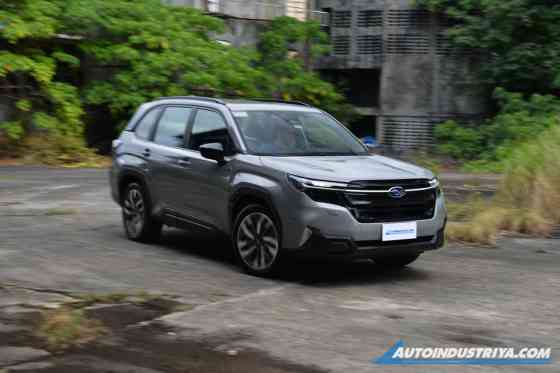
However, some of that fuel economy potential is traded off against signature Subaru features as well, since the symmetrical AWD means power is delivered to all four wheels all the time, unlike some AWD systems that primarily run on 2WD, and switch to AWD only when needed. That said, the Forester is still good for 16.6 km/l at an average speed of 35 km/h. Pretty good numbers for a hybrid, but not quite outstanding, as I’ve experienced more efficient ones.
On the road, however, the Forester has that sense of sturdiness that is actually quite endearing. Compared to the previous generation, the new one has more welds and greater body stiffness, so road composure is really solid. Subaru paid more attention to making the Forester have a quieter cabin for a more refined ride, along with better suspension tuning.
When you do try to corner carve with the Forester, you’ll see that Subaru’s rally DNA is still very much present with this model. The mechanical all-wheel-drive system still gives loads of grip, and the torque vectoring helps the car rotate on corners where its rivals would start to understeer. I would say some crossovers in its class would be more engaging to drive at slower speeds with their sharper steering. But for more spirited drives, I would gladly choose the Forester.
Lastly, Subaru’s EyeSight hazard detection is further refined in the all-new Forester, as it’s less sensitive than before. That said, the driver monitoring system is still on high alert the moment it sees that your eyes are not looking straight at the road.
At PHP 2,498,000 and at only one variant, the Subaru Forester e-Boxer hybrid may have a challenge at hand, considering the all-new RAV4 surprised everyone with its starting prices, but not quite the mountain the new CR-V e:HEV AWD has to climb with its almost PHP 2.8M price tag.
All things considered, maybe a lower variant with a shorter feature list on the spec sheet, but still with the e-Boxer powertrain could make the Forester a bit more competitive in the segment.
With customers now giving a warm reception to hybrids, the Subaru Forester entering its electrification era is not just about keeping up with current trends, but a matter of necessity. Efficiency’s an important ingredient these days, but I think the Forester’s traditional flavors will still be its selling point, while its newfound skill in being more mindful of fuel is the icing on the cake.