2026 Mazda BT-50 4x2 AT

- Make: Mazda
- Model: BT-50 4x2 AT
- Engine: 3.0L DOHC 16V Inline-4 VG Turbo Intercooler Diesel
- Max Power: 190 PS @ 3600 rpm
- Max Torque: 450 Nm @ 2600 rpm
- Transmission: 6-speed AT with manual mode
- Price as Tested: ₱1,600,000
9/10
9/10
8/10
8/10
8/10
8/10
Bargain Workhorse
Pick-up trucks have evolved from simple workhorses with minimal comfort into versatile vehicles. Today, these are essentially tall cars with open beds that can handle overlanding adventures or casual trips to the nearest Starbucks parking lot.
With features once exclusive to the more pricey cars, these trucks have become a popular choice among many Filipinos seeking an all-around vehicle that combines practicality with a touch of rugged style. That's why you see many household-name brands offering their own pick-up trucks such as the Toyota Hilux, Mitsubishi Triton, Ford Ranger, Isuzu D-Max, and Nissan Navara.
What Mazda offers is the BT-50: a similarly capable pick-up that shares a lot with the Isuzu D-Max, and combines comfort and utility, priced at just PHP 1,600,000 for the 4x2 variant.
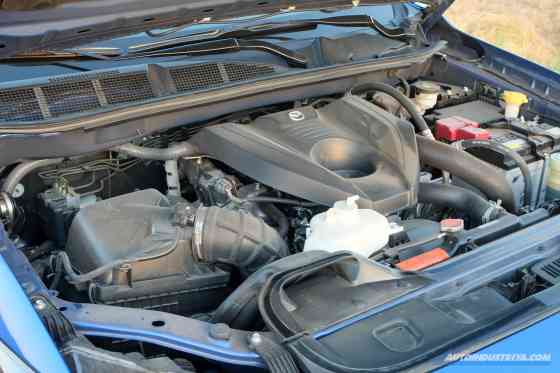
Mazda and Isuzu teamed up in 2016 to make this change. Before that, the BT‑50 shared its underpinnings with the Ford Ranger, but starting with the 2020 model, it switched to the D‑Max platform, using Isuzu engines and technology while keeping Mazda’s own styling and features.
Behind the bumper of the BT‑50 sits the bulletproof 3.0L 4JJ3‑TCX intercooled-turbo diesel from Isuzu that spits 190 PS of power and 450 Nm of torque. As many mechanics will tell you, a diesel engine with a timing chain is considered more reliable than one with a timing belt. Timing chains typically require little to no maintenance and are usually designed to last the entire life of the engine, provided you keep up with regular oil changes and PMS.
This engine is paired with a 6-speed automatic transmission featuring a manual (+/–) shifting mode. With a 76-liter fuel tank, the BT‑50 could theoretically cover up to 1,041 kilometers on a full tank, but we’ll dive into that in more detail later.
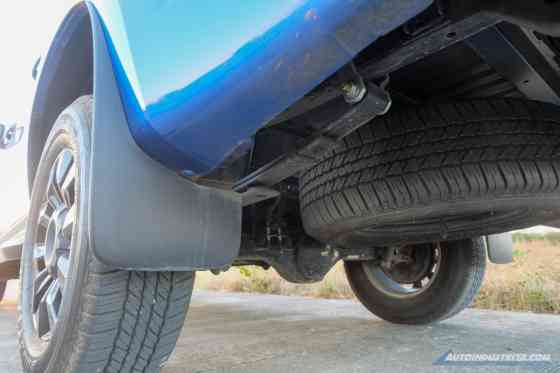
The front suspension uses an independent double-wishbone setup with coil springs and a stabilizer bar, while the rear is supported by parabolic leaf springs to handle bumps and loads. And, yes, these are also identical to the D-Max on paper.
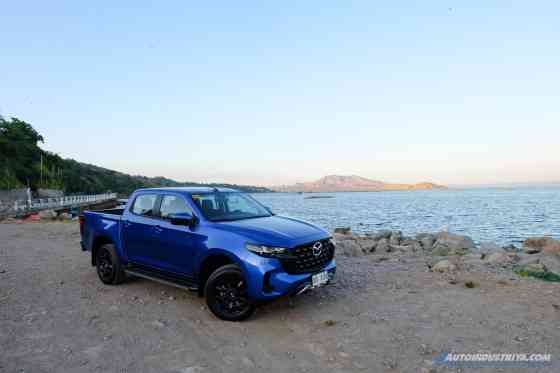
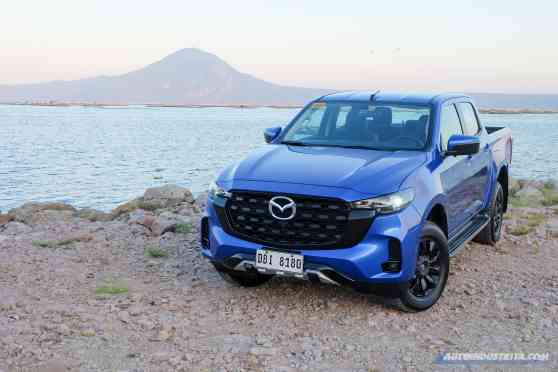
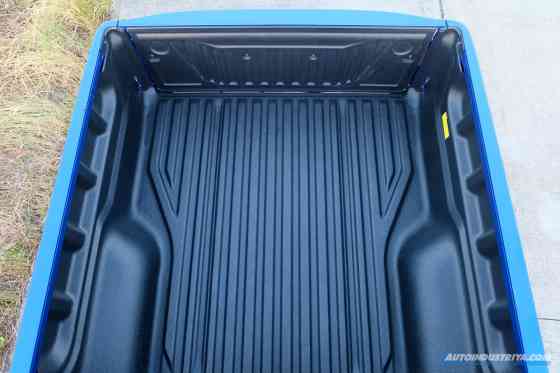
The BT‑50’s exterior screams Mazda style from every angle. Up front, the bold grille flaunts Mazda’s signature “face,” flanked by LED headlights with manual leveling, LED fog lamps, and DRLs. At the rear, LED brake lights, tailgate assist, and a rugged bed liner add both style and function.
Riding on black 17-inch alloy wheels, the BT‑50 delivers that unmistakable Mazda signature look that’s ready for both city streets and weekend adventures.
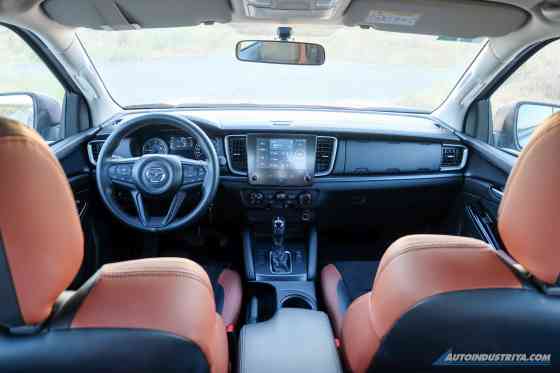
As for the BT‑50’s interior, I didn’t expect much given that this is essentially Mazda’s “entry-level” trim. Yet, it surprises with its terracotta-and-black leather seats accented with Leganu Suede, giving a somewhat premium feel. You also get an 8-inch infotainment display with Android Auto and Apple CarPlay, analog climate controls, a rear AC blower with USB-C port, ISOFIX-compatible rear seats for child seats, and a black leather steering wheel with terracotta stitching, which all add up to a surprisingly refined cabin for its class.
On the safety front, the BT‑50 comes equipped with driver and front passenger airbags, ABS, traction control, hill-start and hill-descent assist, a 360-degree camera system, speed-sensing door locks, and rear parking sensors, which cover both active and passive safety for confident driving.
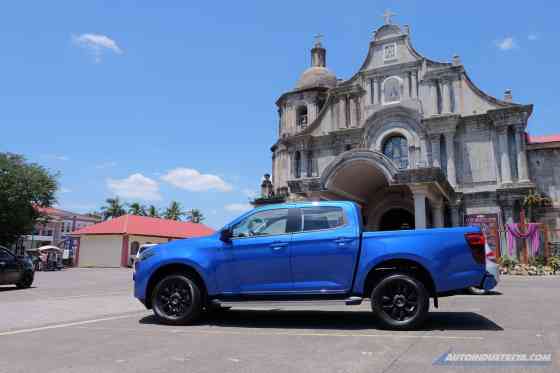
We love to drive, and when we say drive, we mean long distances. I ended up covering about 400 kilometers around Batangas and back to Metro Manila in the BT‑50 for the annual Lenten Visita Iglesia, including side trips. Literally meaning church visit, this cherished tradition involves pilgrimages to multiple churches, with prayers at the Stations of the Cross in each stop.
Naturally, I couldn’t resist giving the BT‑50 some proper leg-stretching on SLEX, then onto STAR Tollway. Despite my admittedly heavy foot, it returned a very respectable 13.7 km/L fuel economy, according to its onboard computer. I may have gotten a little carried away, especially since the BT‑50 felt snappier off the line than its D‑Max cousin, at least to my driving senses.
With this fuel economy, the BT-50 could stretch out its 76-liter fuel tank to more than 1,000 kilometers on one top-up. Again, this is only in theory, as other driving factors like road conditions, traffic flow, weather, vehicle load, etc., still play a big role in fuel economy on the road.
Once off the expressways and into the hectic city streets, fuel economy naturally took a hit, dropping nearly in half. The onboard computer reported an 8 km/L average for the trip along national roads. Still, that’s pretty respectable considering my heavy foot, the fact that I was hustling a 2-ton pickup, and even occasionally spending 10 minutes idling in a church parking lot or at a roadside fruitstand (while the missus buys pasalubong) to keep the cabin cool since this demo unit had zero glass tint. Turn off the engine for just two minutes, and it quickly transforms into a sauna for the occupants.
When the trip wrapped up, I asked my daughter in the back seat what she thought of the BT‑50’s ride. Her answer? Passed!
She said it wasn’t that bouncy or stiff at all, which is a rare compliment for a pickup. That not-so-bouncy ride comes courtesy of its parabolic leaf springs, which keep things comfy while still ready to haul heavy loads. After all, the BT‑50 is built as a workhorse, meant to carry weight in the rear.
Sadly, I didn’t get to test the BT‑50 with a loaded bed this time, but no worries, as they say. Maybe next time, a proper off-road adventure with a bed loaded with a dirtbike or camping gear will be on the checklist, where a 4x4 version of this beast can really stretch its legs and show what it’s really made for.
As for the "sauna" situation earlier, I initially thought I’d dislike the BT‑50’s air conditioning. During the day, even with the climate control blasting at full power, the cabin didn’t cool as quickly as I liked. But once the sun went down, it chilled the cabin just as you’d expect from a brand-new vehicle. Turns out, the only culprit was the completely untinted windows on this demo unit.
Everything about this BT‑50 hits what I’d expect from a solid mid-range pickup. The interior feels comfortable, the engine is responsive (and Isuzu‑bulletproof), and it stays planted even during spirited driving.
If there’s one hiccup, it’s the infotainment. During the trip, I tried connecting two different iPhones to use CarPlay, and both times the navigation came up sideways, which is super frustrating when you’re trying to navigate shortcuts or inner roads to dodge traffic. Not sure if there’s some secret setting, but on other vehicles it’s usually plug‑and‑play (or wireless), with the navigation showing the right orientation instantly.
The sound system could also use a bit of an upgrade to match its PHP 1.6 million price tag. I’m not asking for Bose or Harman Kardon, just something decent that can outshine the audio system in my almost 30-year-old vehicle at home.
The Mazda BT-50 might not be the most popular choice of Pinoy pickup drivers, but that only adds to its unique, exclusive appeal.