2026 Hyundai Stargazer X 1.5L Premium

- Make: Hyundai
- Model: Stargazer X 1.5L Premium
- Engine: 1.5L DOHC 16V Inline-4 with D-CVVT
- Max Power: 115 PS @ 6300 rpm
- Max Torque: 144 Nm @ 4500 rpm
- Transmission: IVT with 7-speed manual mode, FWD
- Price as Tested: ₱1,378,000
8/10
8/10
8/10
8/10
8/10
8/10
Impressive Standout
I’m sure everyone was surprised to find out that the Mitsubishi Xpander was the best-selling vehicle in 2025. After years of the Toyota Vios being the country’s best-seller, Mitsubishi one-upped the leading automaker with a 7-seater MPV.
With spacious cabins, generous cargo areas, crossover-like ground clearance, and third-row seats, it’s no wonder compact MPVs are becoming more popular. There is, however, one MPV that we feel is underrated: the Hyundai Stargazer X.
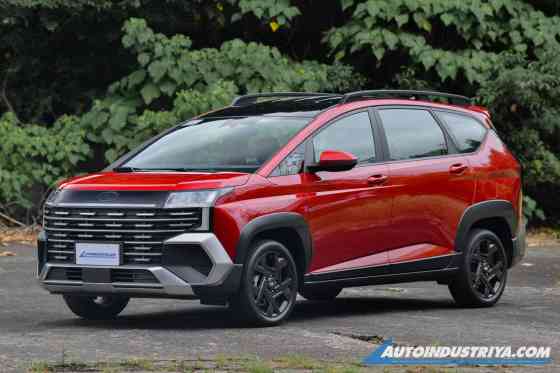
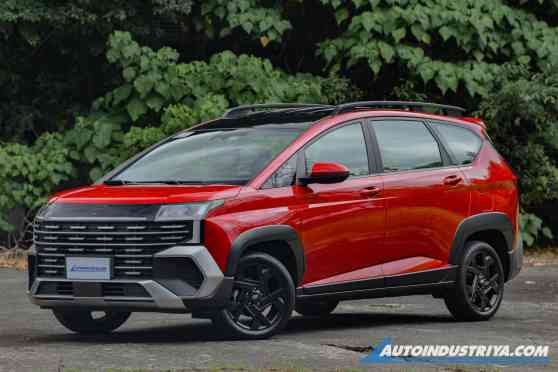
If the Xpander Cross is the "SUV" version of the Xpander, the Stargazer X is essentially the SUV variant of the Stargazer. With its rugged looks, high-tech features, and 7-seat capability, the Stargazer X has the likes of the Xpander Cross in its crosshairs. Not only did the Stargazer X undergo a noticeable makeover, but Hyundai was also busy equipping the MPV with more features and amenities while keeping it affordable. But do these changes affect the MPV’s road manners? And are the changes significant enough to warrant their suggested retail price?
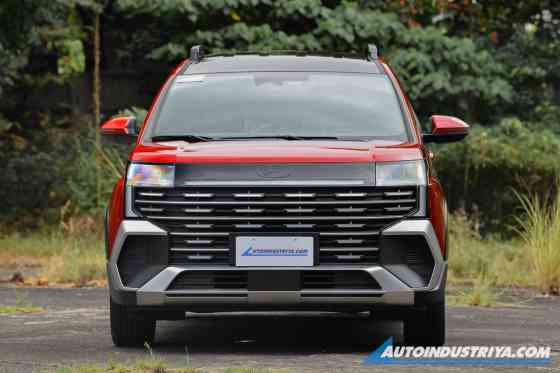
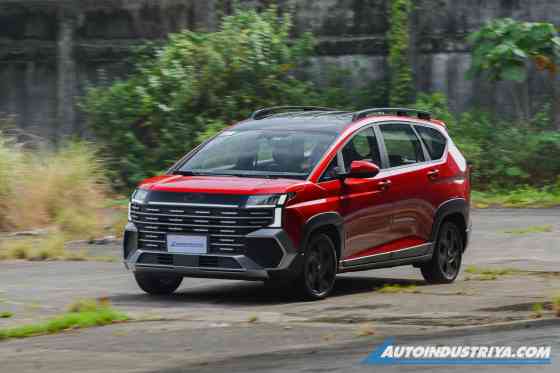
Let’s not beat around the bush; we have to talk about the Stargazer X’s major redesign. The front fascia of the new Stargazer X is something I’m still trying to wrap my head around. While I can understand Hyundai’s decision to give the MPV a more SUV-like appearance in its latest update, the new face of the MPV is quite a departure from its pre-facelift look.
Gone is the Staria-like front end, as it now has a bold new grille, an aggressive front bumper, rectangular LED headlights, fang-like LED daytime running lights, and a gloss black trim piece with the Hyundai logo finished in shadow. It’s daring to say the least, but personally, I’m not the biggest fan of Stargazer X’s aggressive redesign.
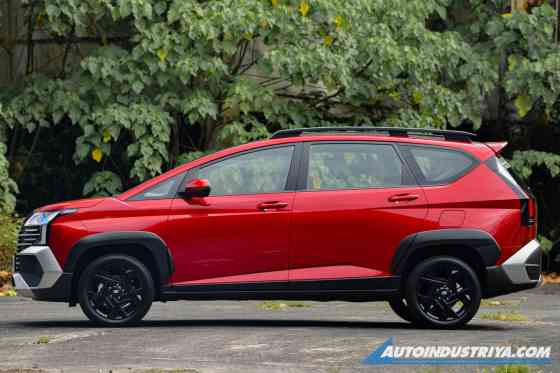
Some might say it’s not just my cup of tea, but there’s another reason why I don’t like the MPV’s new face: it lacks Hyundai’s signature design language. When you look at the Creta, Staria, Elantra, Ioniq 5, Santa Fe, or any Hyundai for that matter, you can immediately tell that it comes from the Korean automaker. The facelift done on the Stargazer X does away with that, resulting in a bit of disconnect in terms of design.
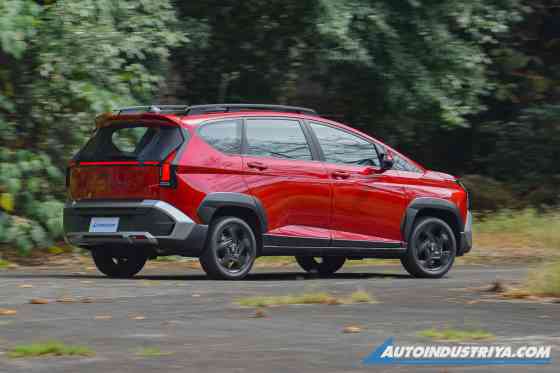
The rest of the vehicle, however, looks great, particularly the rear end. It gets a new set of LED taillights while still keeping the distinct H-pattern design thanks to the full-width light bar that runs across the tailgate. It also gets a new tailgate spoiler and a more stylish rear bumper with faux metal accents. Rounding up the exterior changes are the gloss black alloy wheels, the roof rails, and the wheel arch moldings that add to the SUV-like appearance of the Stargazer X.
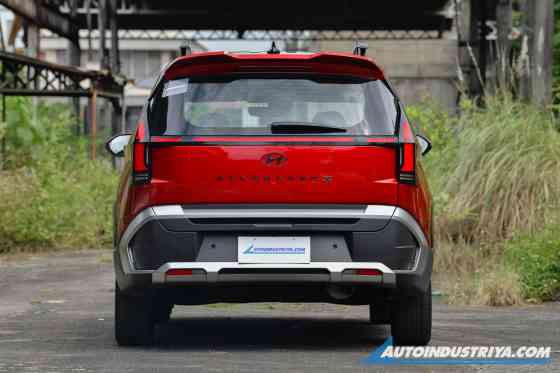
Overall, I just wish Hyundai did not have to resort to making the Stargazer X look like an SUV since I much preferred the Starla-like appearance of the pre-facelift version. Let me know what you think of its look in the comment section.
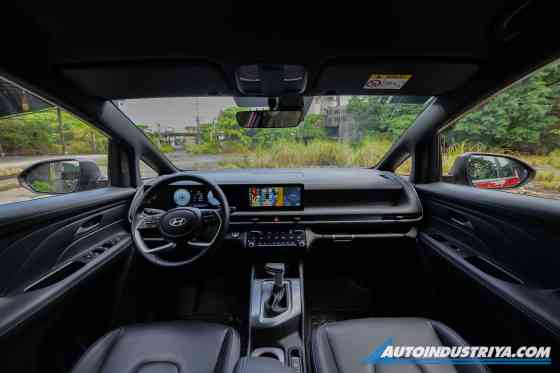
Hop inside, and the Stargazer X gets a redesigned dashboard layout that’s more ergonomic and is accompanied by a pair of 10.25-inch screens; one is the digital instrument panel, while the other is the touchscreen infotainment system. The controls are neatly laid out, and everything is where you expect it to be, which is always a plus in my opinion. From the buttons on the steering wheel to the automatic climate control, as well as the switches on the center console, like the parking sensors, it’s easy to remember which goes where and what button activates a certain feature.
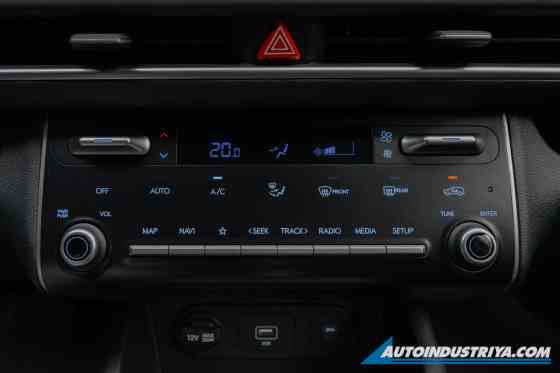
Speaking of climate control, it gets a new touch-sensitive panel that’s accompanied by toggle switches to adjust the fan speed and temperature. It is perhaps one of the sleekest-looking climate control panels fitted in a mass market vehicle, but it looks and feels premium. Props to the designers for making it available in the Stargazer X.
I’m a big fan of vehicles with commanding driving positions, and the Stargazer X did not disappoint. Even at its lowest setting, you can almost see everything while sitting behind the wheel of the MPV. Paired with a tilt & telescopic steering column, it’s easy to find the desired driving position. Hyundai even put a center armrest, which is a nice feature to have when you’re driving on the open road.
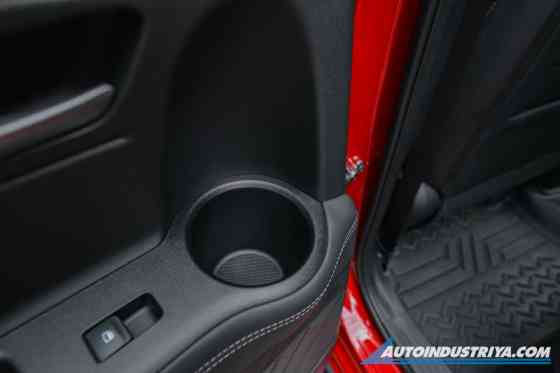
Like all Hyundais, the Stargazer comes with wireless Android Auto & Apple CarPlay. This means you just need to pair your device with the touchscreen, and it can immediately play your favorite tunes and help you navigate with ease. It also has a 6-speaker sound system that pushes above its weight in terms of sound quality. Other features worth mentioning in the Stargazer X are the wireless charging pad, the fast-charging USB-C ports (both front & rear), the folding tray table for the rear passengers, and the cleverly-placed cup/tumbler holders for the second-row passengers.
Combined with the clever use of gloss black accents and upmarket design of the interior, the Stargazer X impresses in the cabin & features department. Hyundai didn’t have to make any drastic changes, but for the sake of enticing customers who want a stylish and feature-packed 7-seater MPV, the 2026 Stargazer X is a clear winner.
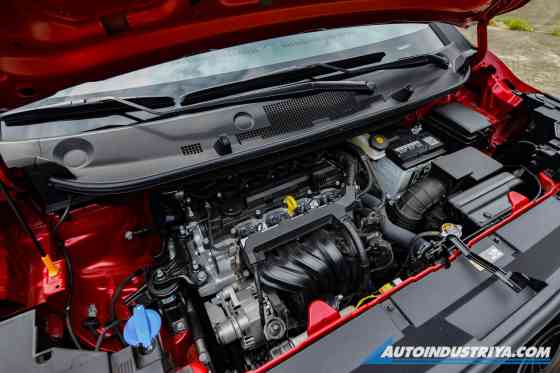
Just like the pre-facelift version, the 2026 Stargazer X is powered by the brand’s familiar 1.5L naturally aspirated Smartstream G four-cylinder engine that’s shared with the Creta. It puts out 115 PS at 6300 rpm and 144 Nm of torque at 4500 rpm. Power is sent to the front wheels via an Intelligent Variable Transmission (IVT), which is the brand’s take on a CVT.
I’ve already said it before, but Hyundai’s IVT feels like a traditional torque converter automatic, but without the slushiness. It also doesn’t have the rubber band-like effect of most CVTs and feels direct, which translates to a better driving experience. The Stargazer’s 1.5L and IVT combo means it can smoothly cruise on the highway, as well as stay in the powerband when driving spiritedly. It also has various drive modes, which include Eco, Normal, Smart, and Sport, with the latter you can activate by moving the gear selector towards the left while in “D”.
Once you’re in Sport mode, you’ll be surprised by the powertrain’s eagerness. What it lacks in sheer displacement, it makes up for in revs and responsiveness. And since the revs linger in the power band more, the Stargazer X can be quite spritely on the open road despite only having 1.5L of displacement. It also has manual select to mimic “seven gear ratios”, but I mostly left it in D since the drivetrain was doing an impressive job. Once you’re done having fun and you’re back in the city, the Stargazer X reverts to a smooth operator and keeps the revs low.
When it comes to fuel consumption, the Stargazer X is easy on the fuel bills. It can easily average up to 11 km/L in light city traffic, but can also do up to 12 km/L in lighter conditions. Out on the highway, you can expect the MPV to return between 17 and 18 km/L, which puts the MPV at hatchback-like efficiency. Set it to Eco Mode, and it can even hit close to 19 km/L if you can keep an even lighter foot on the accelerator.
The Stargazer X also excels in handling and ride comfort. Yes, it’s a rather tall 7-seater MPV, but it has communicable steering. This is surprising since most vehicles on the road today have numb steering. You always know what the front wheels are doing, which translates to better on-road feel. The suspension is geared towards comfort, as it delivers a supple ride, but it can still handle some curves with ease. Those seated in the third row may have to contend with a slightly firmer ride, but that’s to be expected since it’s situated near the rear suspension.
The 7-seater compact MPV market is quite the arena, and the Stargazer X is in the thick of it. With the likes of the Xpander Cross, the Veloz, the BR-V, and the XL7 all vying for buyers who are looking for an SUV-styled MPV, the 2026 Stargazer X is right there in the front lines.
After spending some time with the 2026 Stargazer X Premium, I can confidently say that Hyundai’s 7-seater MPV delivers bang for the buck value. Yes, some might say its price tag of PHP 1.378 million is relatively steep, but put it this way, the Mitsubishi Xpander Cross also carries a similar sticker price.
However, the Stargazer X Premium comes with a full suite of advanced driver assist systems (ADAS) like adaptive cruise control, lane-keep assist, blind-spot monitoring, forward collision warning with autonomous emergency braking, and rear cross traffic alert. The Xpander Cross doesn’t come with ADAS, but it has one feature the Stargazer X wishes it had: a 360-degree camera system.
Between the Xpander Cross and the Stargazer X IVT Premium, I believe both MPVs are evenly matched in terms of refinement, comfort, and handling. But Hyundai bounces back with more safety features and is a relatively newer vehicle, as the Xpander’s platform is already 9 years old.
Overall, the Hyundai Stargazer X Premium delivers one heck of a value, looks & feels more upmarket, and deserves your attention. But with Mitsubishi’s dominance in the MPV segment, Hyundai has one heck of a hill to climb.