2026 Ford Everest 2.0L Wildtrak 4x4 10AT

- Make: Ford
- Model: Everest Wildtrak 4x4
- Engine: 2.0L DOHC 16-valve Inline-4 Bi-Turbo Diesel
- Max Power: 210 PS @ 3750 rpm
- Max Torque: 500 Nm @ 1750-2000 rpm
- Transmission: 10-speed A/T, 4WD w/ Terrain Mode
- Price as Tested: ₱2,640,000
9/10
9/10
8/10
9/10
6/10
8/10
Standard Setter
Most people see the Raptor nowadays as one of the so-called “game-changers” in the pickup truck class. But if you’ve been around long enough, there’s another Ford variant that actually brought all this sport-oriented trend to the mainstream – it’s the Wildtrak.
Back in 2009, a time when the Athletes, the Pro-4X, and the Conquests of the current pickup segment were merely an idea, if you wanted to have a pickup truck that would turn heads with added styling right off the dealership, chances are you were headed to a Ford casa.
The Wildtrak treatment was one of the first ones that turned an otherwise utilitarian-looking pickup truck into something more fit for an urban lifestyle. Eventually, buyers started noticing, and the rest of the competition came up with their own versions, and that changed the way we see pickups from being merely a workhorse to a vehicle that fits multiple purposes.
While the Wildtrak name has always been attached to the Ranger, this time Ford Philippines has decided the Everest should have it too in our market. So how did the Wildtrak treatment fit the SUV? I spent a week with it as my daily to find out.
This generation of the Everest with the Wildtrak, as we know it, is not exactly very new anymore. We've already had quite a few experiences with some of the other Everest variants, such as the Sport and the Titanium. If you want to read about it, then we have the links here. So, quite simply, this review is going to be more of a refresher, or rather a reminder of what the Everest offers and what it can do as an SUV.
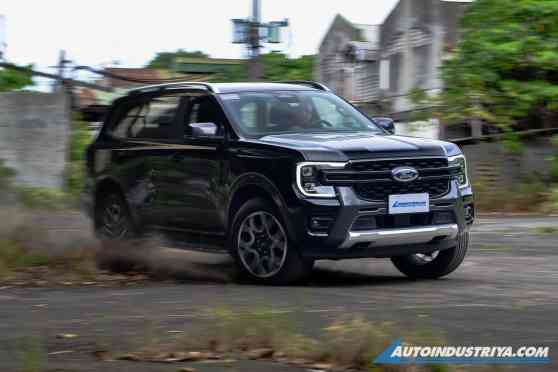
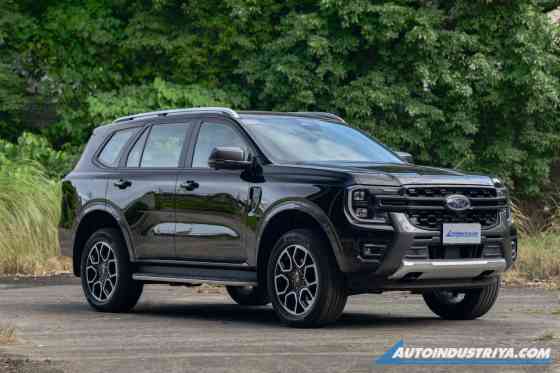
As it is given the Wildtrak name, it’s apparent that this Everest features less chrome than the Titanium+ variant. If you're the type of buyer who doesn't like chrome in their SUVs, then this would probably be the variant for you.
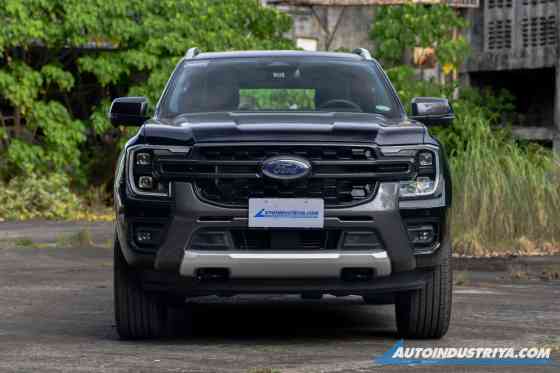
The front fascia is completely identical to the Ranger Wildtrak with the gray H-trim on the bumper, along with the Matrix LED headlights that move the focus of the beams as you turn the steering wheel. Compare it to the rest of the Everest variants, and you’d see the added touch of style without ever going overboard.
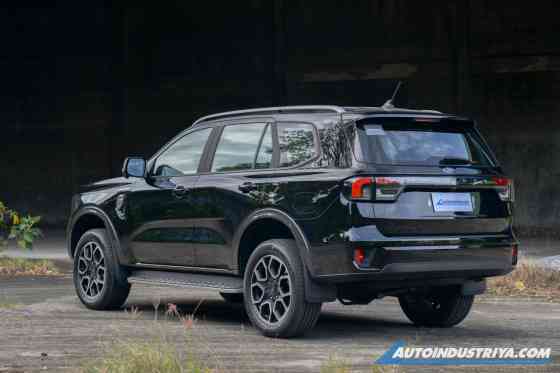
A bit more gray-colored trims find their way to the fenders, while the Everest Wildtrak also gets 20-inch wheels, where the unique design and the two-tone finish are exclusive to this trim. It does make the SUV a lot more macho and imposing, especially when you pair it with the black color of this tester I had.
Speaking of black, the Wildtrak emblem blends in at the back, and I noticed the functional roof rails are actually a bit taller in this variant, so it kind of adds up to the sportiness of the SUV.
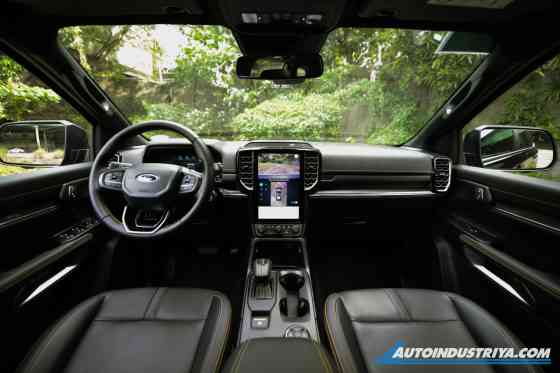
Being the top-of-the-line trim means the Everest Wildtrak has all of the features you could think of in a modern SUV. Panoramic sunroof, the largest infotainment and instrument screens Ford could fit on the dashboard, ambient lighting, black ceiling, and of course, Wildtrak embossed on the leather seats with the orange contrast stitching. Perhaps the only thing missing here is a premium audio system from a well-known audio brand, but I see why Ford didn’t bother since the standard ones are already more than decent.
It’s been more than three years since we first encountered the Everest’s cabin, and time has been pretty kind to it. The 360-degree camera, wireless Apple CarPlay and Android Auto, the wireless charging pads, Type-C ports, and dual-zone climate control have been there from the start, and the inner door handles tucked on the grab handles still catch people off guard, especially when riding the Everest for the first time.
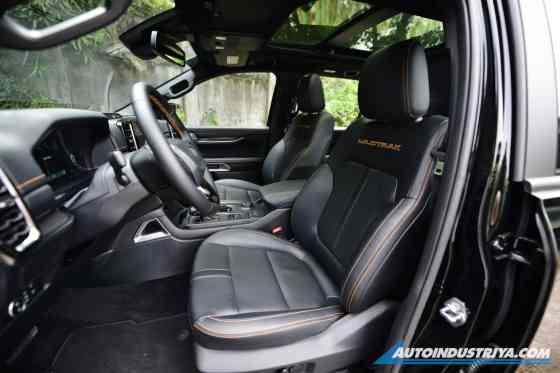
Elbow, head, and knee room won’t be a problem for the first two rows of the Everest’s roomy cabin for adults. But much like other 7-seater SUVs, the third row will still be the economy class section with limited knee room – that is, unless you slide the second row seats a bit more forward.
Accessing the cargo area is still very convenient at the back with the power tailgate, revealing space that can fit things up to 15 inches long, 43 inches wide, and 30 inches tall with all three rows up. The Everest Wildtrak also comes with a power mechanism for folding the third row seats, so with the press of a button, you can increase cargo length to 44 inches. The slide and fold mechanism for the second row increases that further to about 67 inches.
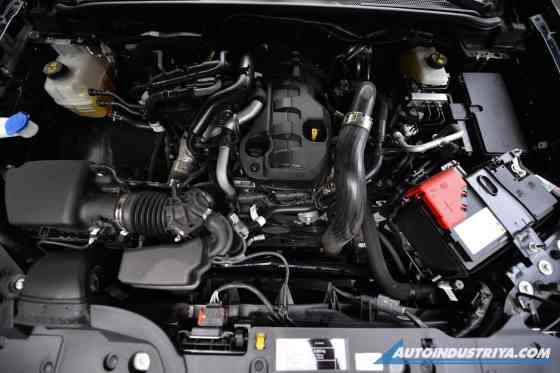
Under the hood, you'll find the familiar 2.0-liter Biturbo diesel, which makes 210 PS and 500 Nm of torque, so it's the same one found in the Titanium+ 4x4 Everest and also the Ranger Wildtrak 4x4. It's also mated to a 10-speed automatic and the 4WD system with both high and low range, with multiple terrain modes to suit whichever surface you're in.
Being back behind the wheel of the Everest reminds me of how refined it is for a ladder frame SUV. And though I’ve already gotten behind the wheel of the latest SUVs around, the Everest remains the least truck-like to drive in my opinion. The steering feels light thanks to the EPS setup; you barely feel the vibrations, and you barely hear the noise from the turbodiesel in front.
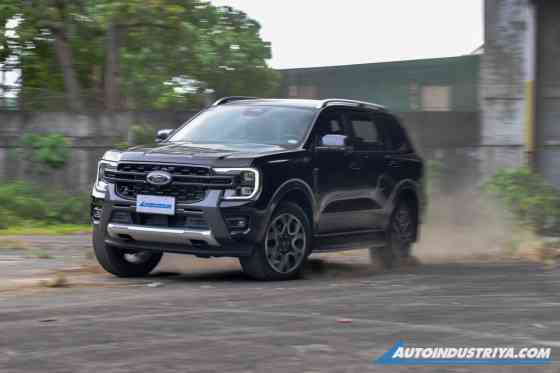
Ford seems to have updated the 10-speed transmission’s software with the Wildtrak, as it didn’t have the weird downshifting behavior from the Titanium 4x4 I drove a few years ago, so it’s a much smoother experience now.
Power is, as expected, more than adequate given its size, with serious pull when you bury your right foot. But uphill sections expose the 2.0-liter unit’s heavy reliance on turbo boost for thrust. I’m very curious how the 3.0-liter turbodiesel V6 will change that in the future, as the current Biturbo unit is going out of production soon.
Much like before, the Everest’s ride is also very composed, given its tall ride height, giving a good balance between comfort and control. There's not a lot of movement in the body when you're going through bumps, with the Watts link suspension setup keeping things stable at the rear. The dampers do a good job absorbing the imperfections and minimizing oscillations, so you don't really feel any major tagtag even with the 20-inch wheels on.
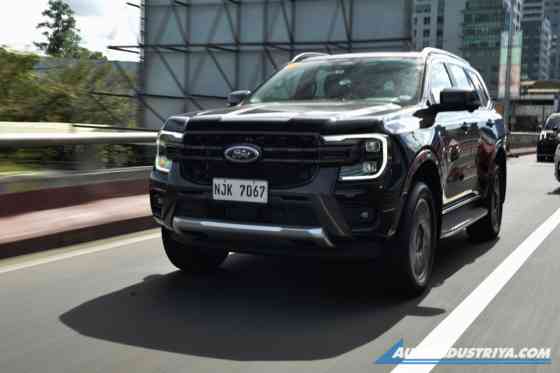
Fuel efficiency, of course, is as expected of a 4x4 SUV, not too stellar in the city. I'm only getting around 7.2 km/l here, but on the highways it rises to around 14 km/l. But even then, you'll still go very far in a full tank of diesel since the capacity is around 80 liters.
This being a top-of-the-line trim, you get ADAS and things like blind spot monitoring, forward collision, adaptive cruise control, lane keep, all that stuff, and it works to a point that it doesn't bother you so much with your driving. I like the tuning done to the assists as it kind of slowly tugs you back with the lane departure, and the warnings in the sensors don't really feel like they are alarms, which is a good thing for me, making it less distracting for the one behind the wheel.
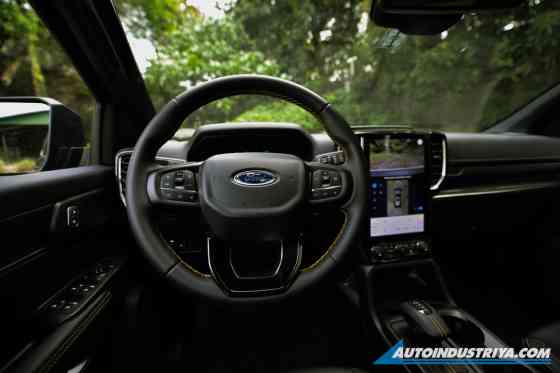
Unfortunately, I did not have the time to test the Everest Wildtrak on an off-road course, but given the prior experiences I had with the Titanium, I reckon it’s just as capable as that. Likewise, I feel most buyers of the Everest Wildtrak will likely spend about 90% of their time driving on the pavement anyway, while the remaining 10% will be those occasional trips by the riverside or doing light trails for camping.
However, that's the area where I still have a concern with the Everest and the Ranger in general. You see, these models are equipped with rear diff locks and hill descent control if you're going off-road, but you'll have to activate those by going on the screen. You wouldn't want to fumble on submenus when going off-road, so it would have been nice if Ford had just made a physical button, maybe somewhere here in the center console.
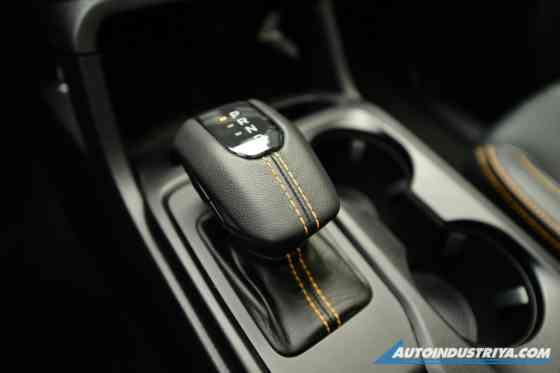
One more thing you wouldn't know is that the Everest has a manual override in its automatic transmission unless you press the buttons on the left side of the gear selector, which have the minus and plus signs on them. I mean, it's good that the Everest still has it, but I think it would be much more intuitive, more engaging, or rather more natural, if Ford simply put paddle shifts as they did on the Ranger Raptor.
Overall, the Everest Wildtrak left a good impression on me, just like my previous experiences with the other variants. It's capable, comfortable, refined, and it's the least truck-like to drive among its competitors. Ford likes to move goal posts, and I think other ladder frame SUVs are yet to catch up with this iteration of the Everest.
Apart from the concern from the wet belt setup of the 2.0-liter diesel in terms of long-term reliability, there's just really one thing the Everest is going up against and wouldn't beat. Actually, it also applies to its competitors, and that is inflation. The Everest Wildtrak in this 4x4 trim retails for PHP 2,640,000. It has really gone way up in price compared to around 10 years ago, and that's just really how it is nowadays when you're in the market for a ladder frame 4x4 SUV.
Given the state of our roads, PPVs should be here to stay. It’s just that nowadays, you really have to pay a lot to get your hands on these and play.
*DISCLAIMER: Ford Philippines tells us the Everest Wildtrak is still available in select dealerships, but in very limited quantities. Hence, at the time of this writing, the Everest Wildtrak is no longer on the Ford website.*