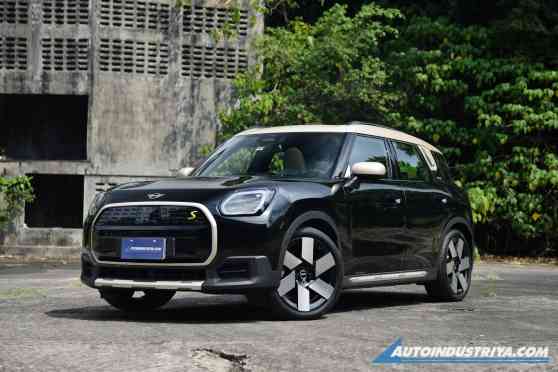
2025 Mini Countryman Cooper SE All4 Electric

- Make: Mini
- Model: Countryman Cooper SE
- Engine: Dual Motor / 64.6 Li-Ion BEV
- Max Power: 313 PS
- Max Torque: 494 Nm
- Transmission: Single-speed A/T
- Price as Tested: ₱3,899,000
8/10
8/10
7/10
6/10
7/10
7/10
The Next Chapter
The Countryman has always been the brand's adventurous, slightly more practical sibling – the one ready for a weekend escape with family or friends rather than just a solo city jaunt.
Now, for 2025, it's embracing the future with an all-electric powertrain, joining the growing ranks of battery-powered crossovers. But can this bigger, greener Mini retain the go-kart handling and quirky charm that fans adore, while delivering the range and practicality expected of a modern EV? We got behind the wheel of the new electric Countryman to see if it successfully blends Mini's iconic character with zero-emission motoring.
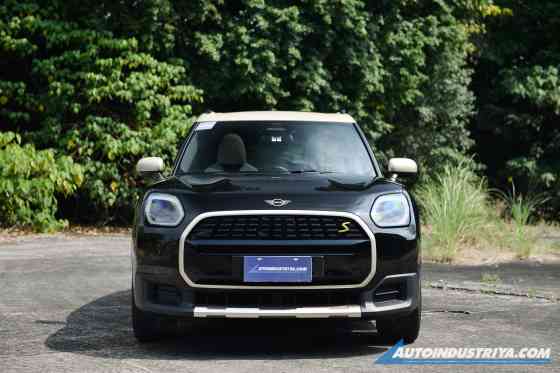
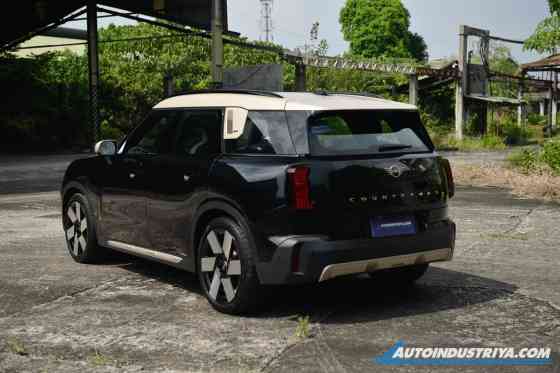
To be honest, I have never really been a fan of the Countryman. Calling it a "Mini" is a bit of an oxymoron, but the job requires us to be open-minded and fair, so I tried to be as objective with the Countryman SE as possible. Style-wise, it follows the brand's new “Charismatic Simplicity” design direction, giving it seemingly 2D highlights and a more angular design. The new look gives it a sleeker, less bulky appeal compared to its predecessor.
The new U25 Countryman is based on the BMW UKL2 platform, which it shares with the X1 and X2 along with the electric derivatives iX1 and iX2 that are offered at similar price points locally. Mini Philippines says their new Countryman is sourced from Leipzig.
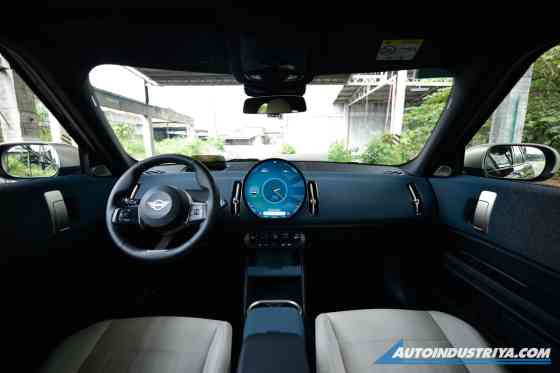
As you enter the cockpit, you are welcomed by a colorful but thoughtfully designed interior. It does keep the iconic Mini elements like the 9.4-inch central display -albeit digitalized and sized like a wall clock- with the toggle switches just below it, and the very minimalist layout. It plays out sound from a Harman Kardon speaker system, which was very much to my liking.
While some people might appreciate everything integrated into the digital display, I personally prefer my A/C controls to be analog and separate. The Mini OS 9 works well and comes with wireless connectivity for Apple CarPlay and Android Auto for compatible devices.
I like the treatment on the interior door panels, which are also made from recycled fabric, which the manufacturer says contributes to the overall sustainability of the vehicle. It looks particularly cool at night with the ambient lighting on.
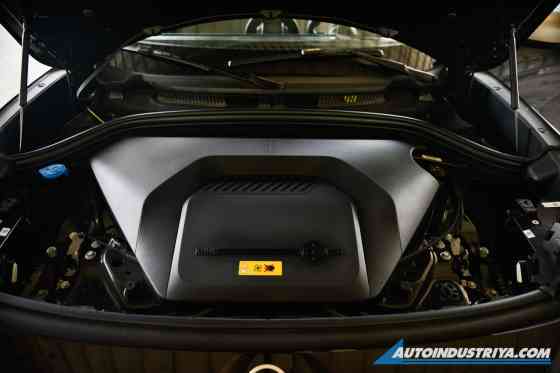
Under the hood is part of the electrical system that powers the dual-motor setup, producing 313 PS and 494 Nm of torque. Mini claims a range of 398 to 432 km on a full charge (WLTP) from the 64.6 kWh battery. It can go from 0-100km/h in 5.6 seconds. On paper, the numbers are significantly more than those of the Aceman and Cooper, but this also weighs in at 2,075 kg compared to the Aceman S at 1,820 kg.
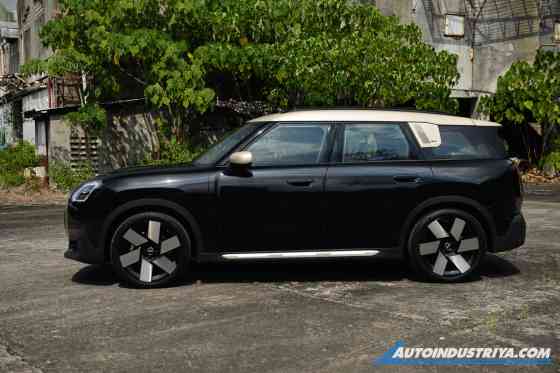
Acceleration is on point, it propels the heft with ease, and being electric, you have instant access to the 494 Nm of torque at your command, especially with 'Go Kart" mode switched on. Since I had my fun already with its more dynamic siblings, the drive was kept mostly on "Core Mode". It is a crossover, after all.
In lieu of engine sounds, it gets "characteristic jingles and striking earcons" as described by the brand. On its default Core Mode, the sound design is inspired by Nicolaus Copernicus both inside and outside of the car. The exterior sound is for pedestrians to hear you as electric cars are virtually quiet.
In terms of handling, it is by no means a slouch and can take on corners quite respectably. Just remember that this is a larger (and heavier) vehicle when you do decide to have a spirited drive with it. In terms of comfort, this does ride a bit firm due to the presence of the battery pack, which adds to the overall stiffness and weight of the car. This is a common characteristic with EVs I have so far driven.
For charging, it takes about 29 minutes to go from 10-80% on a fast 130 kW DC charger and over 6 hours with an 11 kW AC charger.
In terms of safety, it is equipped with an ADAS suite that includes Active Blind Spot Detection, Lane Departure Warning, Front Collision Warning, Rear Cross-Traffic Warning, and Rear Collision Prevention. It also comes with adaptive cruise control, lane keep assist, and traffic jam assist, allowing for level 2 partially automated driving.
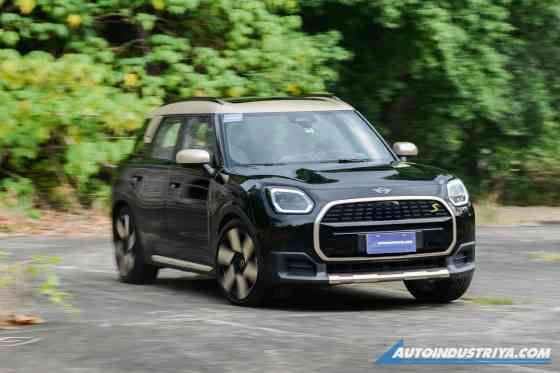
In the Philippines, Mini offers only one flavor for the electric Countryman, the top-range Cooper SE All4 rated at 313 PS with all-wheel-drive. Being electric, the Countryman SE makes the cost of entry more accessible at PHP 3,899,000 with a local tax incentive still in place until 2028. For those who want an engine, the Cooper S All4 is also offered at a significantly more expensive pricetag.