2025 Hyundai Elantra 1.6T N Line DCT

- Make: Hyundai
- Model: Elantra N-Line
- Engine: 1.6L DOHC T-GDI
- Max Power: 204 PS @ 6000 rpm
- Max Torque: 265 Nm @ 1500-4500 rpm
- Transmission: 7-speed DCT, FWD
- Price as Tested: ₱1,795,000
9/10
8/10
9/10
7/10
5/10
8/10
A bold comeback
The compact sedan segment in the Philippine market is a far cry from what it used to be.
When I was a kid, these cars were everywhere. The 90s Corollas, the Civics, the Elantras, the Lancers, the Sentras, a lot of kids (including me) would alight on one of those cars in the early morning to go to school. But on weekends, I would see those very same models being raced hard whenever we sit at the grandstands of Batangas Racing Circuit.
Back then, compact sedans were the default choice for a daily driver, but in recent years, they've been pushed to the sidelines by crossovers and MPVs that offer more space, more practicality, and more ground clearance for about the same, or even cheaper prices.
So it's rather interesting that Hyundai has decided to bring back the Elantra in a market where most people would rather choose a crossover. And it wasn’t just one variant we’re talking about. Hyundai brought back the Elantra with its whole arsenal – the pure ICE base, the hybrid, high-performance Elantra N, and the N-Line that sort of wants to be the middle ground between being entertaining but still practical. What gives? Well, I drove the latter for a week to find out.
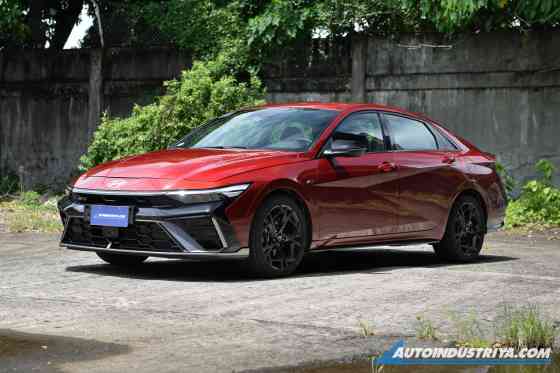
The N Line is Hyundai’s take on adding sporty design elements and enhanced features to their standard models. Think of Toyota’s GR Sport, BMW’s M Sport, Audi’s S-Line, or Honda’s RS, and the N Line sort of paints a similar picture.
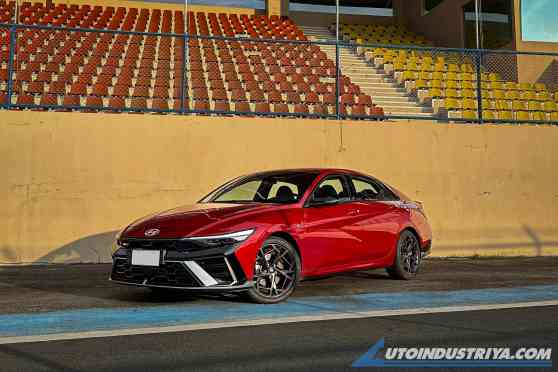
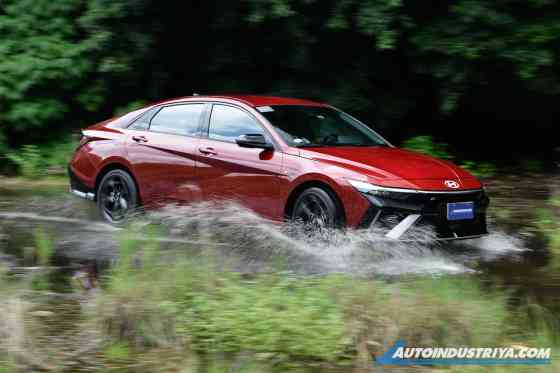
With that reference, the Elantra N Line sure looks one of the least conservative in the lineup. The hardcore N still tops it, but still has that aggressive character in it. The low nose, combined with the gloss black trims, the slim LED DRLs, and the factory-fitted front chin, the N-Line will indeed catch quite a few glances, especially in this shade of red.
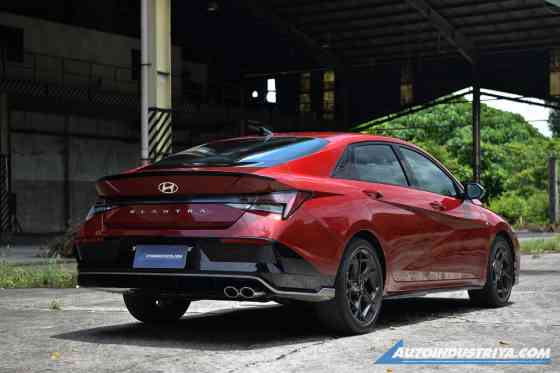
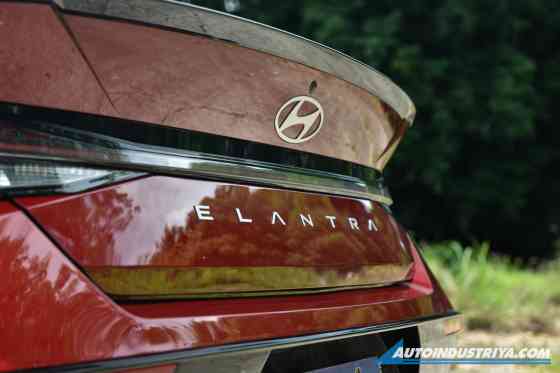
Couple that with the dark-colored 18-inch N-Line wheels, side skirts, the rear bumper with the diffuser-style element, and the swoopy fastback-ish rear that finishes off with a ducktail spoiler, the Elantra N Line won’t look out of place in a car meet.
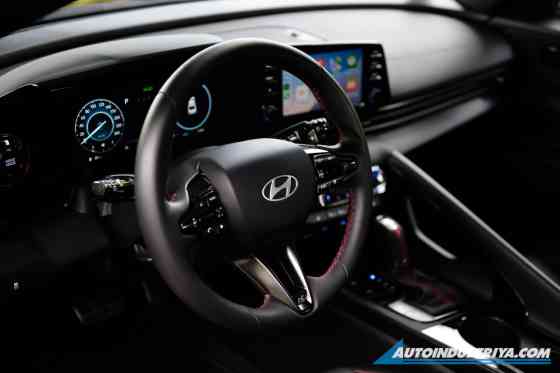
Once you step inside, the Elantra N Line’s interior gets standard issue stuff for models getting the sporty treatment, such as red stitching, a black-themed interior, thicker bolstered seats, aluminum pedals, special floor mats, you know, the usual, on top of the additional N-branded bits in the steering wheel and the shifter.
Don’t get me wrong: I still very much appreciate a driver-focused dashboard with a proper gauge binnacle and without the panoramic curved screens from the usual dashboard designs we see nowadays, but the screens of the Elantra make it look a little dated already. Perhaps it’s because it’s not the first time I’ve seen its instrument cluster theme – the Stargazer, Creta, and Staria share the same graphics as the Elantra’s.
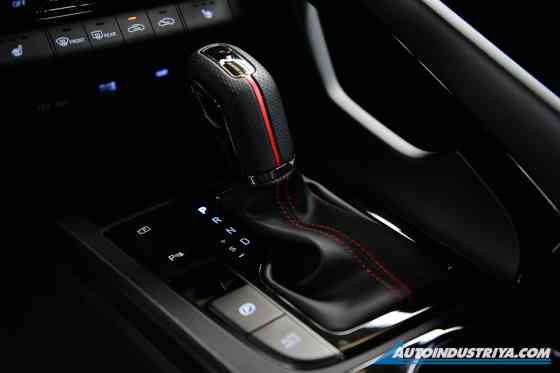
Apart from that, however, the Elantra N Line is on par with current cabin feature trends such as wireless CarPlay and Android Auto, wireless charging, dual-zone climate control, and rear A/C vents with Type-C charging ports. The only thing I was looking for was a premium audio system, but the stock speakers work just fine.
In terms of space, legroom and elbow room are never an issue in both the front and rear of the Elantra, as it could sit five comfortably. For cargo space, the Elantra really flexes its big boot, offering up to 42.5 inches of length, 42 inches wide, and about 21.5 inches of height. Like its rival, the Civic RS, there’s a lever at the trunk that folds the rear seats in a 60:40 split to increase cargo length to 68 inches.
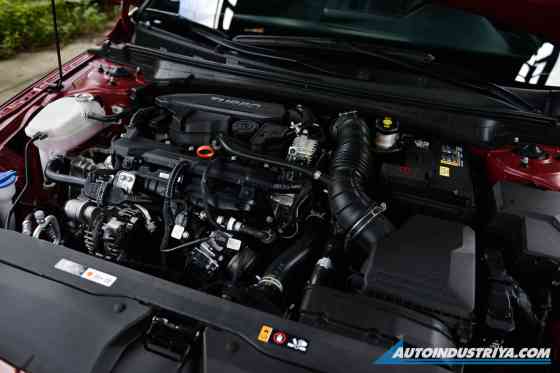
Powering the Elantra N Line is a 1.6-liter, four-cylinder turbo gasoline direct injection engine. It's the only one in the lineup that gets this, and it's mated to a 7-speed dual clutch transmission. With 204 PS and 265 Nm of torque through the front wheels, those numbers sound fun for a sporty compact sedan. And yes, the N Line does deliver in that aspect.
The 1.6 turbo has the pulling power to give a smile on your face, but not to the point where it scares you. It sounds nice and throaty, and it's got plenty of midrange grunt especially when you switch to sport mode, but the pull seems to taper off and start to lose steam once you reach the higher rpms.
Some people frown upon the idea of having a dry DCT in a daily driver, because years ago, the really bad ones could be very rough and jerky at low speeds. But Hyundai has nicely refined the Elantra N Line's 7-speed dry DCT to eliminate those characteristics. You'll still have that feeling of the clutch disengaging from a standstill, but it does so in a smooth manner. It’s like being driven by someone who’s a pro at manual transmissions rather than a clutch-riding newbie.
Once you start rolling, that’s where the DCT starts to feel so direct - none of the slipping and rubberbanding, and the fun just keeps getting better when you're already cruising along the expressway. The DCT is quite responsive for upshifts and downshifts when using the paddle shifters, so much so that I’m able to downshift from 7th to 4th gear quickly without the jerkiness. It’s no Porsche PDK, but it’s close. It just kept rev-matching until I settled into the gear I want.
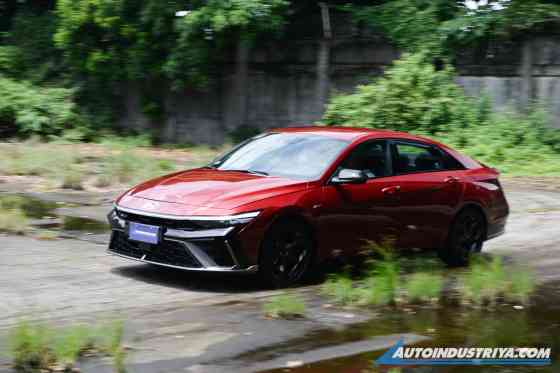
Along with the entertaining engine and powertrain combo, the chassis is also one of the nicest things about driving the Elantra N Line. It's stiffer than the standard Elantra models, and it has a multi-link rear along with the hybrid compared to a torsion beam in the base. So when it comes to direction changes, the car feels really sharp, perhaps even sharper turning in than the Civic RS.
But of course, it has a compromise. While it felt more lively and more eager to carve corners than the Civic, it does ride a bit firmer. You just feel the road more with this. The suspension oscillations, however, are kept pretty low, so the ride feels like you're running well-tuned aftermarket street coilovers - livable on short drives in the city, but for longer journeys and rougher pavement, it might not be your cup of tea, and the hybrid could offer better cushioning.
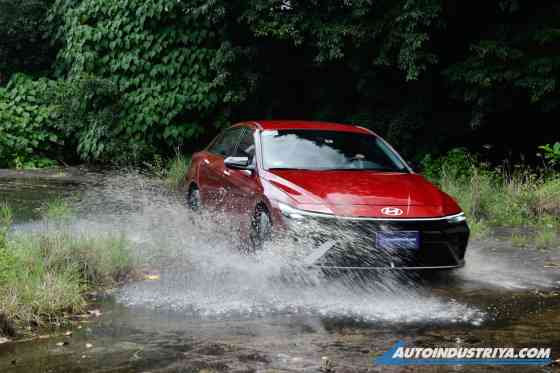
As for fuel economy, it's pretty good on the highway at 16-17 km/l while doing a steady 90-100 km/h, though in the city it's fairly average at around 7 to 8 km/l. Still, a nice compromise for having a 200 horsepower front-wheel-drive sedan as a daily.
The bottom line is, the Hyundai Elantra N Line reminds me of those 90s sport compact sedans I grew up riding on. They were fun, but not feral. Fast, but not furious. There’s goodness in the performance, but you’re spared from the harshness of wanting something with a bit more oomph.
The challenge for Hyundai really is down to pricing. At PHP 1,795,000, it's already at midsize SUV prices like its main rival: the Civic RS Turbo. Most wouldn’t really trade off the practicality advantage of an SUV for an entertaining sedan nowadays, so it’s a pretty big gamble for them to try and revive a shrinking segment.
At the end of the day, I’m just happy these types of cars still exist for enthusiasts like me even though the price is getting to be more and more out of (reasonable) reach.