2024 Mitsubishi XForce 1.5 GLS CVT

- Make: Mitsubishi
- Model: XForce GLS
- Engine: 1.5L DOHC 16V Inline-4 MIVEC
- Max Power: 105 PS @ 6000 rpm
- Max Torque: 141 Nm @ 4000 rpm
- Transmission: CVT, FWD
- Price as Tested: ₱1,367,000
7/10
9/10
8/10
9/10
7/10
8/10
The better balance
Mitsubishi got us all hyped up when they came up with the all-new XForce.
For one, it’s their first crossover since the ASX, and they want to compete in one of the most competitive segments in the market – the B-SUV class. On its pre-launch drive where we got to experience it, we came away knowing the hype is indeed real for the XForce.
With a striking design, plenty of cool features, and a trick drive mode system that pays tribute to Mitsubishi’s glorious past, we did see the XForce has what it takes to be competitive. However, there’s something about the top-spec GT variant that made us raise our eyebrows, but in a not-so-good way – the pricing is quite a tough ask at under PHP 1.6 million.
We’ve encountered a lot of good cars having a hard time fulfilling its potential because of a steep price tag, and that seems to be the case for the XForce GT. Let’s see if the GLS variant that’s priced over PHP 200K less is the one that will make the XForce shine.
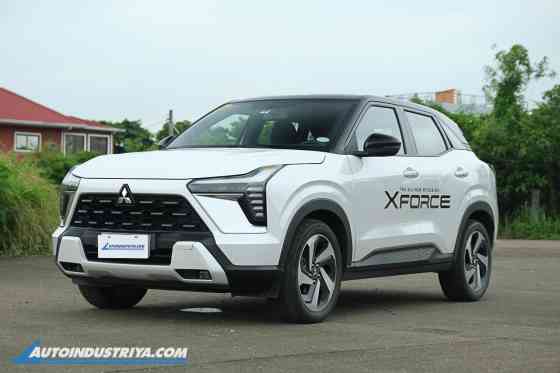
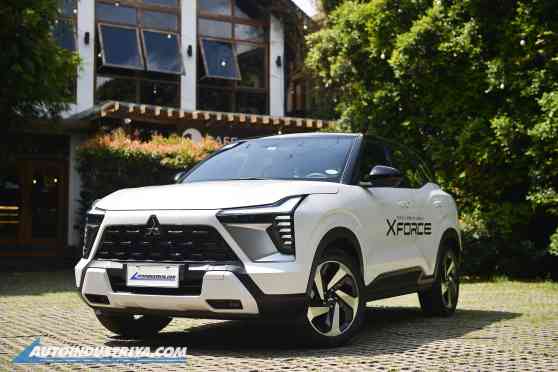
Mitsubishi is a brand that’s never afraid to be bold when it comes to design, and I believe it’s a major win for the XForce in the styling department. The athletic stance, the broad-looking fenders, and the T-shaped lights both front and rear make the crossover look good from any angle - that’s something you’ll never lose out with the lower variant.
There’s almost no difference in terms of looks when you compare the GLS with the GT on the outside. The LED lighting elements, the fog lights, the wheels, and even the two-tone paint job are completely identical to the top-of-the-line model. The only giveaway of the GLS is the lack of a proximity sensor on the grille for the ADAS, along with the camera mounted on the windshield.
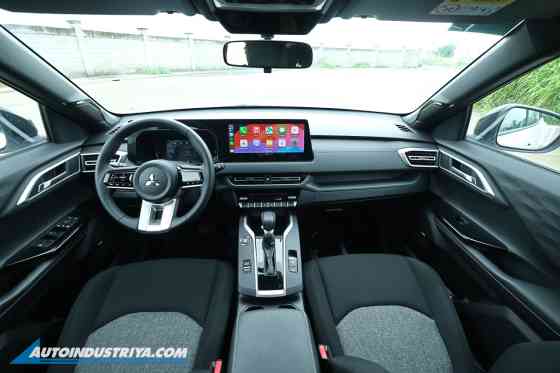
When you hop inside the GLS you’re welcomed with a darker and more monotonous cabin. There are black and denim gray fabric seats instead of leather. Likewise, the mélange fabric found on the doors and the dashboard of the GT is replaced with black synthetic leather. There’s also a blank space on the right side of the steering wheel, as the GLS does not have the GT’s buttons for cruise control.
Other than that, the things you can find on the top-spec GT variant are mostly here. The 8-inch instrument cluster, the 12.3-inch touchscreen display that shows aircraft-style avionics, the Pajero-inspired clinometer and altimeter, the wireless Apple CarPlay and Android Auto, dual-zone climate control with the Nanoe-x air filtration system, the same amount of cubby holes and cupholders, and the cool box underneath the center armrest. But for me, the best thing here is that the Yamaha premium sound system stays with the GLS.
There’s just a bit of an issue with the infotainment system though, as the wireless Apple Carplay disconnects randomly at times. The response time of the screen also lags at times, so that’s something Mitsubishi can work on with a software update. But for now, it’s good that most of the important vehicle functions are not buried in the submenus so you can wait it out until the screen responds.
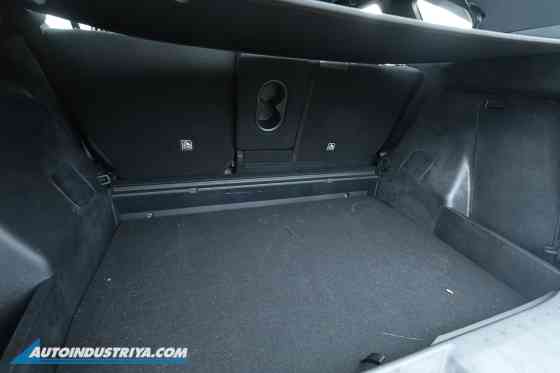
As the lower variant in the XForce lineup, you do have to do the lifting of the tailgate on the GLS as it does not come with the power function and kick sensor of the GT. But once you lift that up, you’re given the same cargo area that measures 33 inches long, 40 inches wide, and 30 inches tall with the floorboard set at its lowest position. The 40-20-40 split rear seats also stayed, allowing you to still seat four passengers while carrying things up to 62 inches long with the center armrest folded.
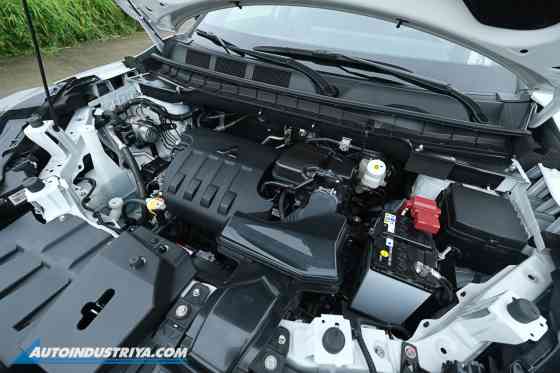
Like the top-spec GT, the XForce GLS has the 4A91 under its hood. With 105 PS and 141 Nm of torque paired to an Aisin-sourced CVT, the powertrain does OK most of the time with pulling the B-SUV’s weight. That’s the case when you only have around 2 or 3 passengers on board. But at full capacity with luggage, it’s no different to the likes of the non-turbo HR-V and Yaris Cross where you have to reach the higher RPMs and plan your overtakes if you want to drive at a spirited pace.
Fuel efficiency is one of the strong points of the XForce, as I was easily able to do 11 km/l in the city and 17 km/l on the highways. The CVT plays a big part in that, and it’s a big improvement over the 4-speed auto found on the Xpander and Xpander Cross.
It’s also nice that the drive mode functions were carried over to the GLS variant, as the difference in switching between modes is indeed felt depending on the driving conditions. It’s effective at altering the behavior of the XForce with its handling and throttle response to give you a reassuring drive. For me in particular, I made good use of the Wet mode as it was mostly raining during my time with the crossover.
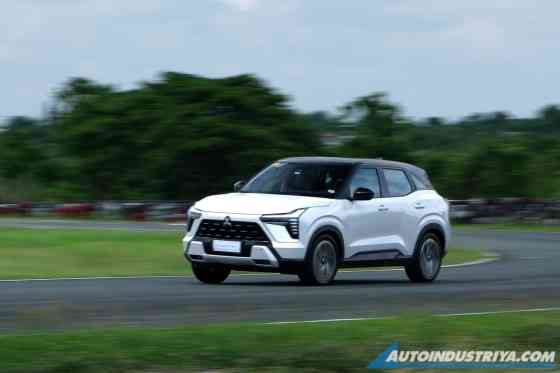
Whereas most B-SUVs feel like raised hatchbacks when it comes to driving feel, the XForce actually drives more like a bigger C-segment crossover. Mitsubishi put in the effort to lower the NVH levels inside with better sound deadening, and the suspension is tuned more for comfort than firm and sporty.
I think it’s where Mitsubishi has always excelled when you look at how the Xpander and Montero Sport ride compared to the rest of the competition in their respective segments, and the same formula may have been applied to the XForce.
There’s just really one thing I wish the GLS variant could have had, and that is a standard cruise control. While you’d rarely use it when driving around the metro, it would be really convenient whenever you do those long drives and long stretches of expressways.
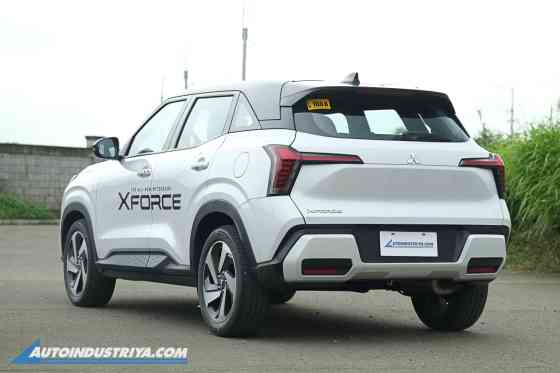
At PHP 1,367,000, the price tag of the XForce GLS is easier (albeit slightly) on the eyes than the top-spec GT which costs more than PHP 200K more. I won’t be surprised if the majority of XForce sales would make up the GLS, as it offers 90% of the features of the GT. Most of the omitted features are things that you could live with, especially when you’re offered a more reachable price point with the same driving experience.
But, as with most Mitsu models, always check your dealers because chances are there is a good discount available. That's just the way it has been for a while.