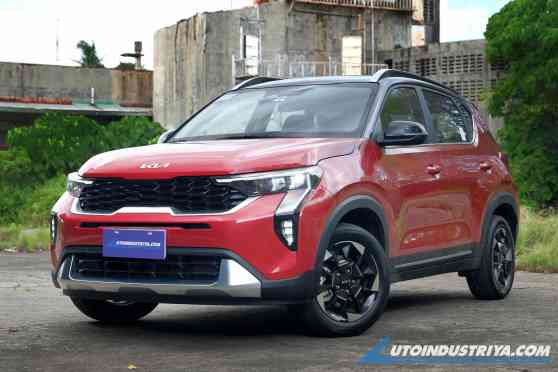
2024 Kia Sonet SX 1.5L CVT

- Make: Kia
- Model: Sonet SX
- Engine: 1.5-liter DOHC 16-valve Inline-4 Smartstream-G
- Max Power: 115 PS @ 6300 rpm
- Max Torque: 144 Nm @ 4500 rpm
- Transmission: IVT, FWD, manual select
- Price as Tested: ₱1,158,000
8/10
8/10
8/10
7/10
8/10
8/10
High Aspirations
Ayala-led Kia Philippines had quite the budget crossover on their hands when they launched the Stonic four years ago. Despite the pandemic dampening auto sales, the gradual loosening of restrictions at the time allowed buyers who needed to buy a brand-new car to get their hands on Kia’s affordable A-SUV.
With a price range of PHP 735K to PHP 925K when it was first revealed, the Kia Stonic put sedans and hatchbacks on notice with its affordable price tag and wide array of standard features. Unfortunately, the Stonic for the Philippine market was not long for this world as the PRC-sourced crossover SUV was soon axed.
So what did Ayala Corporation’s vehicle division (ACMobility) do? They got its replacement: the 2024 Kia Sonet.
Serving as the (indirect) successor to the Stonic, the Sonet also serves as the brand’s entry-level crossover in emerging markets. But despite being a budget-oriented vehicle, the Sonet is brimming with style along with plenty of amenities to keep passengers safe and entertained simultaneously. But before we get into that, let’s take a good look at the Sonet’s stylish looks.
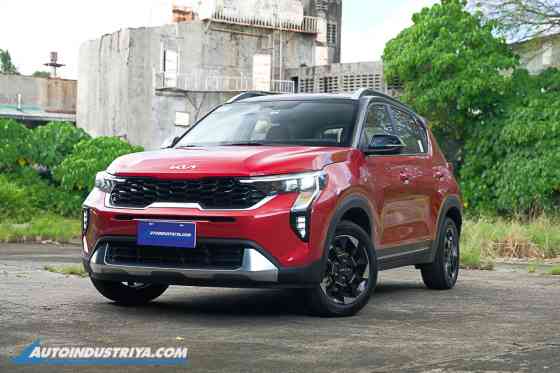
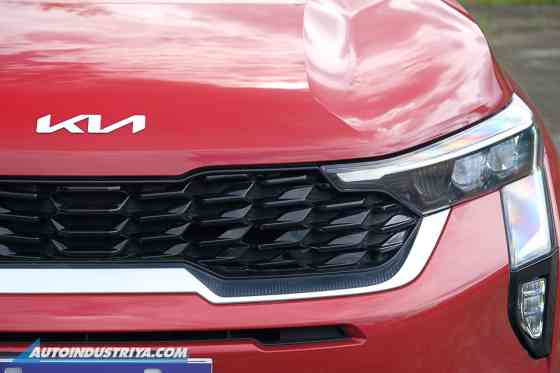
Immediately grabbing our attention is the Sonet’s unmistakable face. Featuring the brand’s “Opposites United” design language, the crossover SUV features a unique set of LED headlights and a redesigned tiger-nose grille. Thanks to the distinct front fascia, the Sonet, despite being a "budget-oriented" crossover, looks more upmarket. Heck, from certain angles the Sonet seems to borrow inspiration from the likes of the EV9 and the recently-refreshed Carnival MPV.
The same can be said for the design of the Sonet’s rear as it comes with C-shaped wraparound LED taillights along with an LED light bar that runs the entire width of the tailgate. This is perhaps my favorite aspect of the crossover as this is also something one would see in the refreshed Carnival I mentioned earlier. We’re hoping Kia Philippines will launch the updated MPV soon, but I digress.
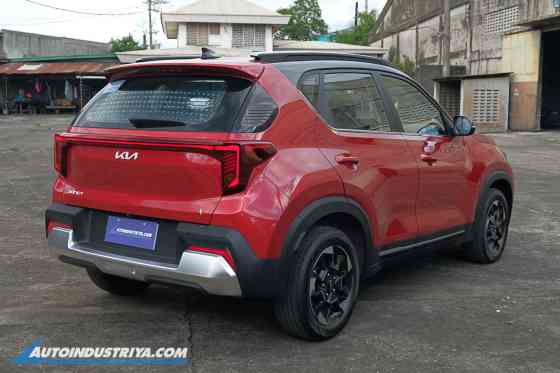
It may not be geared for off-road but I have to give props to Kia for still giving the Sonet some rugged styling elements to add to its exterior looks. It has black body cladding throughout the exterior, faux skid plates painted silver on the front & rear bumpers, diamond-cut alloy 16-inch alloy wheels, and a generous 205mm of ground clearance
All in all, the Sonet’s looks are eye-catching without being overly stylish. Its SUV-like ground clearance is something the Stonic could only dream of getting and provides drivers some peace of mind when going over uneven terrain or gutter-deep floods. Did we forget to mention the SX variant of the Sonet comes with a sunroof? This is something like the Toyota Raize can only wish it could have.
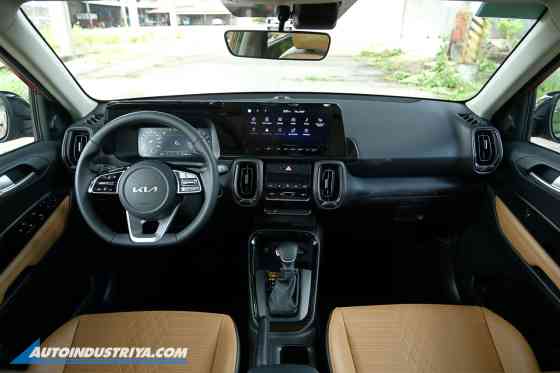
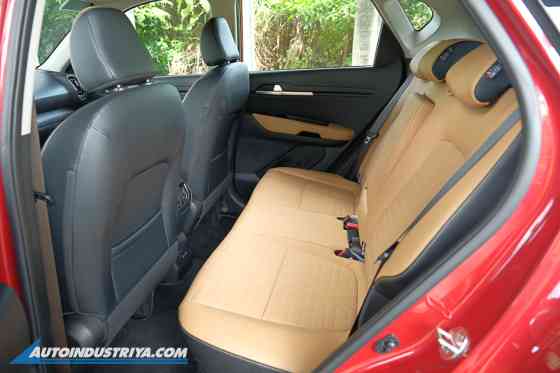
Those expecting the Sonet to have a drab interior will be happy to know that is not the case. Just like the exterior, Kia made sure the cabin didn’t look cheap. Immediately impressing us were the tan leather seats which are exclusive to the SX. While the upholstery may be the synthetic kind, the overall look and finish are something one would expect on more expensive models. They also felt supple to the touch which is surprising, to say the least.
Over to the dashboard is a pair of 10.25-inch high-resolution displays that greet the occupants. If these look rather familiar, that’s because the Sonet also gets the same screen layout as its bigger sibling, the Seltos. Both screens deliver crisp graphics and relevant information very clearly. These are complemented by stylish aircon vents that appear to have been inspired by the Sorento - further giving the vehicle a more upscale appearance.
The touchscreen manages most of the vehicle’s onboard functions like the advanced driver assistance systems (ADAS) and other in-car amenities like light & cabin settings. More importantly, the media display supports both wireless Apple CarPlay and wireless Android Auto. That’s right, all variants get this nifty feature which does away with using a cable to connect your phone to the system.
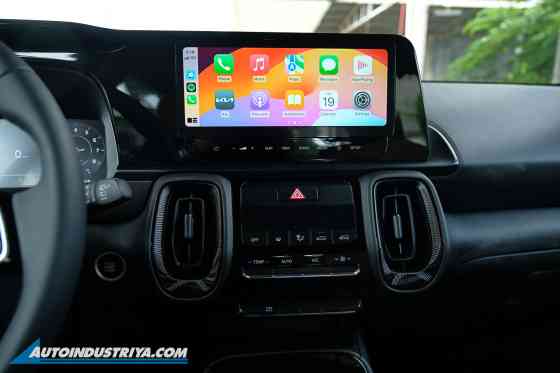
Kia even installed a wireless charging pad so your phone can continue playing your favorite tunes without worrying if you forget to bring a charging cable. Speaking of charging, the Sonet also comes with Type A and Type C charging ports on the front center console and a pair of USB-C charging ports for the rear passengers just below the rear air vents.
Another feature worth mentioning inside the Sonet is the armrests for both the front & rear occupants. While this is something most users would take for granted, do remember that this type of amenity is usually reserved for more premium models. Heck, some vehicles are more expensive than the Sonet but don’t have this type of in-car feature. Sometimes, it's the little things that make a huge difference, especially for budget crossovers like the Kia Sonet.
Last but not least is the simple climate control system. Whereas some brands decided to change things up by integrating the HVAC system onto the touchscreen, Kia went for the “if it ain’t broke, don’t fix it” route. With a simple layout of buttons on the center dashboard along with a center screen to indicate temperature, fan speed, and air direction, changing the climate settings was easy as you didn’t have to avert your eyes from the road.
Despite my praises for the Sonet, there are still several points of improvements Kia could make. For starters, some parts of the cabin rattle when going over rough roads or pock-marked streets. Kia could have also done better in the Noise, Vibration, and Harshness (NVH) department and used thicker side window glasses to reduce outside noise penetrating the cabin. But then again, this is still a budget crossover so that is something to be expected in the end.
While it has decent legroom in the back, taller individuals may find space in the back limited. The sunroof is a nice addition although taller drivers may find this feature a nuisance. However, the driver’s seat is height-adjustable which means vertically gifted individuals can lower the seat height to their desired position. Lesser variants like the EX and LX don’t have the sunroof, however. Last but not least, the 60:40 split rear seats don’t fold flat so if you plan on carrying long luggage, you’ll have to get creative in how to store them in the back.
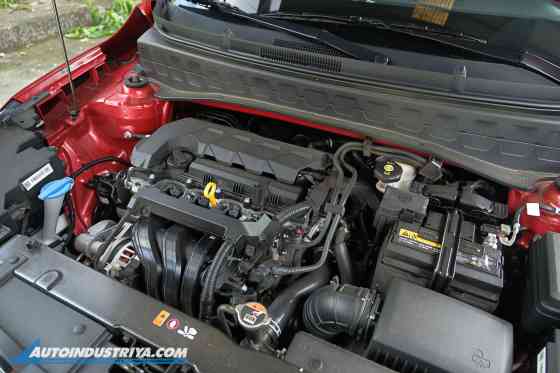
Don’t expect a three-cylinder engine powering the Sonet. Just like the naturally-aspirated versions of the Seltos (and the Hyundai Creta), the Sonet comes with a 1.5L four-cylinder Smartstream G inline-four that puts out 115 PS at 6300 rpm and 144 Nm of torque at 4500 rpm. Power is then sent to the front wheels via the Intelligent Variable Transmission (IVT) which is their take on a CVT.
A push of a button brings to life the humble four-cylinder engine. Put the IVT in Drive (D) and the powertrain smoothly sends the vehicle into motion. Despite having belts & pulleys instead of cogs, the IVT feels like a traditional torque converter automatic as it doesn’t slip or deliver the “rubber band effect” like most CVTs. This is due to the automaker using a chain belt instead of a push belt which helps in reliability as well as improving linear acceleration. It also reduces the droning sound most CVTs are associated with when you press on the accelerator during overtaking or spirited driving.
As for the engine itself, it does its letter to the job and works well with the aforementioned IVT. There’s enough pep from the 1.5L unit to propel the Sonet and it doesn’t feel underpowered. It’s smooth and sips fuel which we’ll get to later. Should you need to overtake other cars on the road more quickly, you can simply set the IVT to Sport Mode and acceleration becomes sharper while the revs linger more in the powerband. You still need to time your overtakes but the 1.5L powertrain will oblige and feels nimble at times. The transmission even comes with manual select which is always a big plus as I prefer to use it when going down steep hills.
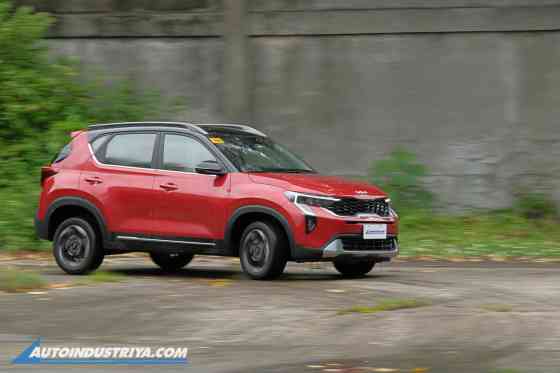
When it comes to handling, the Sonet is quite the agile crossover. It is no sporty crossover but the light steering means the vehicle is easy to handle in town. What’s more is that unlike most crossovers with electronic power steering (EPS) assist that feel rather dull or numb, the one in the Sonet delivers actual steering feedback. This means drivers will be able to tell what the front wheels are doing.
Ride comfort, on the other hand, is a bit of a mixed bag. While the driver and front passenger will experience a more docile ride quality, those seated in the back will be in for a bouncier ride. We’re not entirely sure why this is the case but more than likely this was deliberately done by Kia to offset the Sonet’s cargo-carrying ability. Combined with the vehicle’s short wheelbase, ride quality in the back of the Sonet might not be for everyone. Perhaps swapping out the standard dampers for aftermarket ones might help improve the crossover’s ride quality at a bit of a cost.
As far as fuel consumption is concerned, the Kia Sonet is easy on the fuel bills. In light city driving at an average speed of up to 25 km/h, it was able to return around 10 km/L. Out on the highway at an average speed between 90 - 95 km/h, the Sonet was able to sip on gasoline at 18 km/L. Mind you, the fuel economy figures were done with two additional companions inside the vehicle.

As mentioned earlier, the Sonet SX gets Kia Drivewise as standard which is the brand’s suite of ADAS. It gets intelligent driver aids such as lane-keeping assist, lane-following assist, forward collision avoidance with assist, high-beam assist, downhill brake control (AKA hill-descent control), and driver attention warning which is useful in case drivers feel drowsy while on the road.
All is well and good although I do wish Kia made the lane-following assist feature less intrusive. While I do like the system predicting the upcoming turns, there were times it felt like it was yanking the steering wheel a bit too early for my liking. Fortunately, the system only works at highway speeds as it doesn’t activate when you’re just tooling around the city.
With a price tag of PHP 1.158 million, the top-of-the-line Kia Sonet 1.5 SX is more expensive than its closest rival, the Toyota Raize 1.0 Turbo CVT which retails for PHP 1.063 million. However, the Sonet feels more solid and has better refinement than the Daithasu-developed Toyota. It also has more standard features and amenities like wireless smartphone connectivity, a power sunroof, tan leather upholstery, a wireless charging pad, and intelligent driver aids.
But with a sticker of nearly PHP 1.160 million, the range-topping Sonet SX is already bordering on B-SUV price, albeit from the Chinese marques. Think GAC GS3 Emzoom which has a price range of PHP 998,000 to PHP 1.198 million. Yes, the Sonet is also made in China, but a lot of customers do find the Kia badge reassuring. It is worth noting that at several thousand pesos more, you can already get the bigger Kia Seltos.
At its current price point, some buyers might be tempted to get the lesser variants of the Sonet. The base LX MT retails for PHP 758,000 while the LX AT can be yours for PHP 888,000. Opt for the EX AT and this version is selling for PHP 998,000.
In the end, the 2024 Kia Sonet 1.5 SX hits all the right notes when it comes to features, practicality, and performance but its price tag may hurt its value-for-money proposition for some buyers.