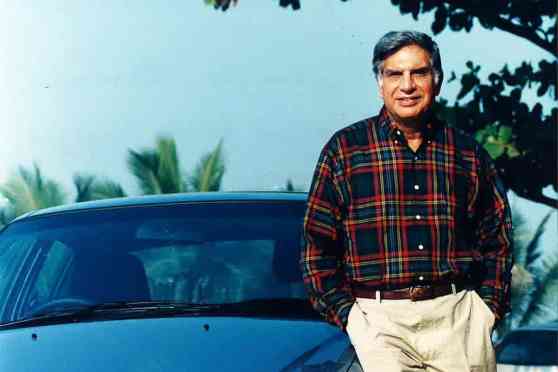
Former Tata Motors chairman Ratan Tata dies

Indian business titan Ratan Tata dies at 86
Ratan Tata, one of India’s most influential business leaders, was cremated after a state funeral in the country’s financial capital on Thursday. The veteran industrialist, former chairman of a $100 billion conglomerate Tata Group, died at a Mumbai hospital on Wednesday, October 9 at the age of 86. India’s Home Minister Amit Shah, officials of the Tata Group, local government officials, and Tata’s relatives were present at the funeral, where the Mumbai police honored him with a ceremonial gun salute. Earlier Thursday, his body was taken to Mumbai’s National Centre for the Performing Arts, where thousands of people including industrialists, state officials, and some of India’s top celebrities lined up to pay their final respects to a man seen by many as an industry legend and icon.
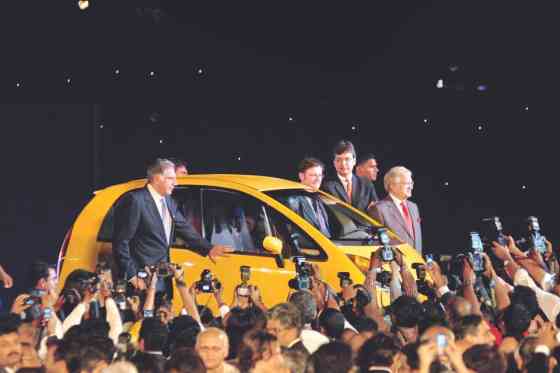
Under his leadership, the Tata Group conglomerate grew significantly to a sprawling collection of nearly 100 companies, including Tata Motors, the country’s largest automaker, Tata Steel, the largest private steel company, Tata Power, and the information technology company Tata Consultancy Services. It also expanded globally with revenue exceeding $100 billion on his retirement. Tata Group pioneered commercial aviation in India by launching an airline in 1932, that later became Air India. The government later took it over. Tata Group then bought Air India from the government in 2021. It also started a full-service carrier, Vistara, with Singapore Airlines, but recently merged it with Air India.
In June 2008, Tata bought Jaguar and Land Rover from Ford for $2.3 billion. A year earlier, it took over Britain-based steel maker Corus for $12 billion. At that time, Corus’ annual steel production was four times higher than Tata Steel’s. But unlike his successes in other projects, Corus was a drag on Tatas, as the company failed to come out of the financial crisis. In December 2012, Tata retired as chairman of Tata Group. He briefly served as interim chairman beginning in October 2016 following the ouster of his successor, Cyrus Mistry. He returned to retirement in 2017 when Chandrasekaran was appointed chairman of Tata Group. But he was still known as a father figure to the group. Tata Group employs more than 350,000 people worldwide with a presence in over 100 countries including the Philippines where it sells commercial vehicles.