PBBM cuts import duty of hybrids to zero

Hybrids now included in revised EO
Last year, President Ferdinand Marcos, Jr. signed the Executive Order 12 as a way of the government to further supplement the EVIDA law that pushes electrification. Under this EO, import duties on battery electric vehicles (BEV) have been cut down to zero, including the importation of charging/distribution parts of electric cars and other related production equipment.
We have seen the effect of this EO as more and more manufacturers have launched battery electric vehicles to the market. But more importantly, they arrive with attractive and competitive prices.
Now, the same tariff breaks will be applied to hybrids.
The National Economic and Development Authority (NEDA) board has approved the extension of EO 12, which expands the coverage to plug-in hybrids (PHEV) and hybrid electric vehicles (HEV) alongside other types of EVs such as e-motorcycles and e-bikes.
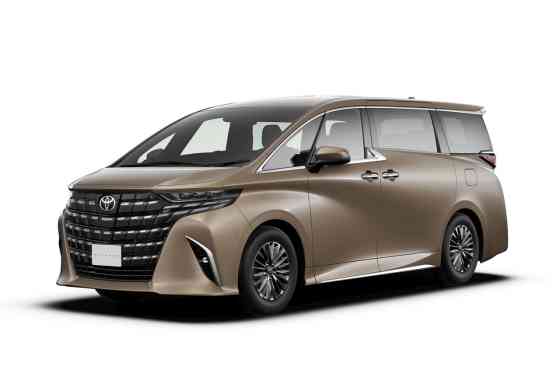
What that means is for non-ASEAN made hybrids that are being charged up to 30% import duties for PHEVs and HEVs, (ex: Toyota Alphard HEV, Mitsubishi Outlander PHEV), it has been cut down to zero. ASEAN-made hybrids, on the other hand, already benefit from zero import tariff due to the ASEAN Free Trade Agreement or AFTA. Thus, prices of those vehicles could remain unchanged.
But much like EVs, the EO is only applicable until 2028. Barring another EO that would extend this in the next administration, import duties for non-ASEAN made hybrids could shoot back up to 30% once the EO expires.
Take note: Based on the revised EO, the zero import duty does not appear to include mild-hybrid vehicles with 12 to 48 volt systems, or vehicles that cannot move using electric power alone.
Since EV infrastructures in the country have not been progressing as fast as EVs entering the market, it’s hybrids that have become more attractive these days as you get the benefit of reduced fuel bills without the range anxiety normally associated to fully electric vehicles.
We don’t want to get ahead of ourselves but the way we see it with the expanded EO12, some hybrids made outside Southeast Asia might match the prices, or could even be lower than the sticker price of their standard ICE counterparts. If you’re eyeing a hybrid as your next vehicle, then the next four years could be the most attractive time to buy one.
Edit: Minor edits have been made to this article for clarification. Hybrids such as the Toyota Corolla Cross HEV and Honda CR-V e:HEV already benefit from zero tariff due to the ASEAN Free Trade Agreement or AFTA since they are made in Thailand. As such, non-ASEAN made vehicles get the most benefits out of the new EO 62.