Nissan goes all-in on EVs, stops development of ICE

Nissan's transition to full electric will vary per market
Last week, Toyota, Mazda, and Subaru made it clear that internal combustion engines (ICEs) are here to stay. Rather than focusing purely on electric vehicles (EVs), the three automakers partnered up to further develop hybrid and plug-in hybrid technologies while also committing to making carbon-neutral ICEs.
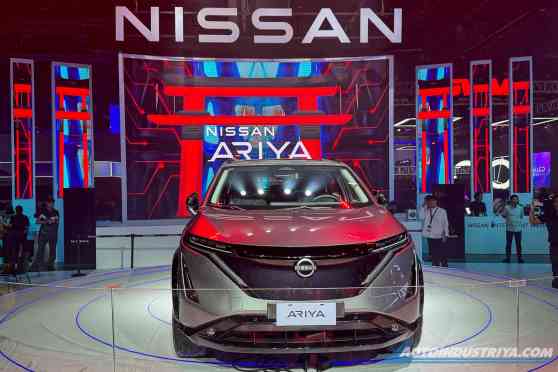
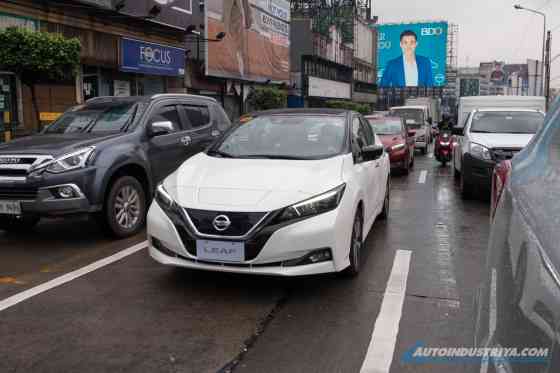
For Nissan, however, they are going all-in on EVs as the company made it clear that they will stop pouring money into developing new ICEs. You read right, Nissan will focus on the further development of EVs and electrification in the foreseeable future.
According to a report by Drive, Fracios Bally, Nissan Senior Vice President and Chief Planning Officer for Africa, Middle East, India, Europe, and Oceania, said to the publication that the company's future is EV.
“Our future is EV. e-Power is a stepping stone to get there, and each market will go at their own pace. We’re not investing in new powertrain for ICE, that’s for sure,” said Bally.
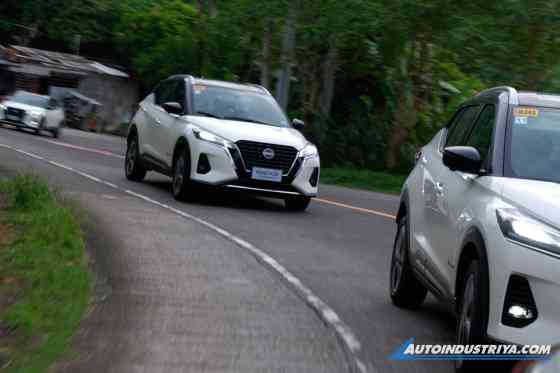
Nissan's method to go electric will be done via the brand's innovative e-Power system. Unlike typical parallel hybrid systems, Nissan's e-Power is a series hybrid wherein an electric motor drives the wheels of the vehicle. It still has an internal combustion engine under the hood but its sole purpose is to charge the onboard battery as well as provide extra power to the electric motor while under load.
With this setup, the engine doesn't power the vehicle itself which means it doesn't always have to be turned on – saving on fuel consumption and reducing carbon emissions. And since the electric motor drives the wheels, it delivers an EV-like driving experience. In the Philippine market, Nissan has proven that this hybrid setup is popular with customers thanks to the Kicks e-Power.
But when will Nissan actually stop making ICEs for its vehicles? For Bally, there is no exact date yet as to when the automaker will make the transition. Instead, the executive mentioned that depending on each market, Nissan will adjust per country and region depending on their emissions laws & regulations.
“Africa’s market is like Euro2, Euro4, so the pace of that [ICE] decline really depends market-by-market, but our investment is clear. It’s EV, reinforce e-Power,” added Bally.
With Nissan looking to shift towards electric vehicles in the future, its ICE-powered models may be living on borrowed time. However, since the transition will vary per market, certain regions will still be able have ICE-powered cars in the long term. The only question now is, will we see more e-Power vehicles arriving in the Philippines soon?