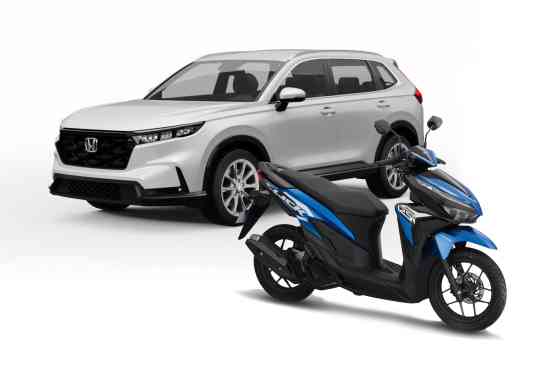
Honda Motor Company net profit has dropped 42% in FY2025 so far

Is Honda in trouble?
If you’re a Honda fan, there is some bad news.
Honda Motor Company has reported a substantial drop in profit for the first three quarters of fiscal year 2025 thus far. By that, they mean April to December 2025, with the final quarter of FY2025 to conclude at the end of March 2026.
The drop is big: they recorded a 42% plunge in group net profit. Actually, they recorded a 60% drop in October to December 2025 compared to the same period in FY2024.
The major reason for the drop is a series of unfortunate events and unexpected shifts that have befallen their automotive division. The motorcycle side is fine, but the automotive side took a lot of big hits, especially in the United States.
Historically, Honda has enjoyed strong sales in the USA, but their gamble on EV isn’t paying off after the plunge in demand due to the change in EV policy. Honda had been preparing and had been investing heavily in EVs in the USA and around the world. They had just launched the Honda Prologue BEV and the Acura ZDX (both co-developed with GM Ultium battery technology), but after “Drill, baby, drill”, demand would have shifted to the more classic ICE models. The high tariffs didn’t help either.
"The North American market is in an unfavorable state," said Honda EVP Noriya Kaihara about the EV market there at a press conference. "We will withdraw our [EV] plans in China and take on a challenge in the country again after strengthening our competitiveness.”
Honda is working to reorient their strategy to be more competitive. Sales are actually fine in the USA, as the company recorded very minimal growth, but not a loss either. It was really the profit that took a hit because of tariffs.
In the Philippine setting, the Honda auto story is quite similar, at least in terms of sales. In 2023, they sold 16,645 units, followed by 15,518 in 2024 and then 16,257 in 2025. So they’re stable, but not really growing, and the numbers achieved per year from 2023 to 2025 are just half of the 31,758 units they sold in 2017, when the market grew due to the fear of new tax rules. Market share now is just at 3.3%, versus the 6.77% in 2017.