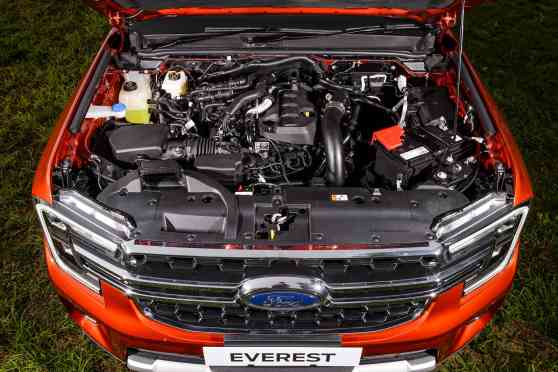
Ford Australia axes 2.0-liter biturbo diesel for Everest, Ranger; PH next?

Single turbo version to remain, along with 3.0 V6 turbodiesel
Without a doubt, the Everest and Ranger are two examples of Ford’s most important models in the market. And if you’re waiting for new developments regarding the Blue Oval’s PPV and pickup truck contenders in the country, then this would be an interesting read.
Ever since the next-generation Everest and Ranger were introduced in the country in 2022, customers have had a choice between two states of tune with Ford’s 2.0-liter EcoBlue turbodiesel engine. Lower variants featured a single turbo setup that produced 170 PS and 405 Nm of torque, while variants such as the 4x4 Wildtrak, Titanium, and Ranger Raptor had a more powerful biturbo version that produced as high as 210 PS and 500 Nm of torque. That could soon change.
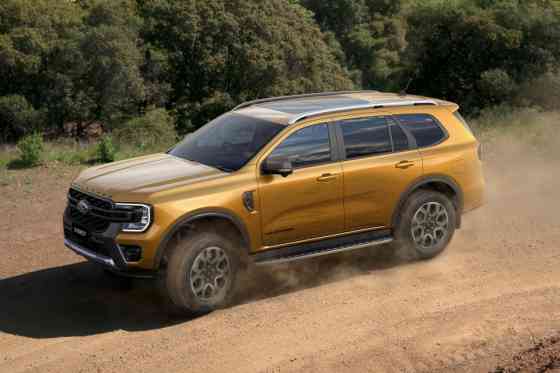
Ford Australia has confirmed it will no longer offer the biturbo version of the 2.0-liter EcoBlue diesel in its lineup once the updated models arrive in 2026. While the announcement did not explicitly state the reason why, some reports say the Blue Oval is simply ending production of the engine globally.
On the other hand, the single turbo version used locally in variants such as the Trend, Sport, and Wildtrak 4x2 will receive a host of updates aimed to potentially increase power, reduce emissions, and enhance its durability.
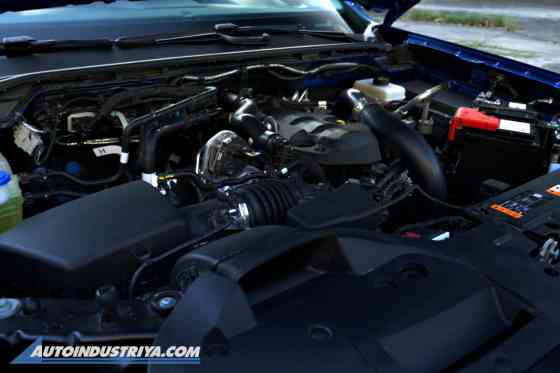
For starters, the single turbo version will receive the biturbo’s 10-speed automatic transmission, replacing the current six-speed unit. But more importantly, the engine will have a new fuel injection system and a switch from a wet belt timing system to a (theoretically) more reliable timing chain setup.
Meanwhile, Ford is set to expand the availability of the 3.0-liter, single-turbo Power Stroke V6 diesel in Australia. This setup delivers a beefy 250 PS and 600 Nm of torque, and is also mated to a 10-speed automatic transmission.
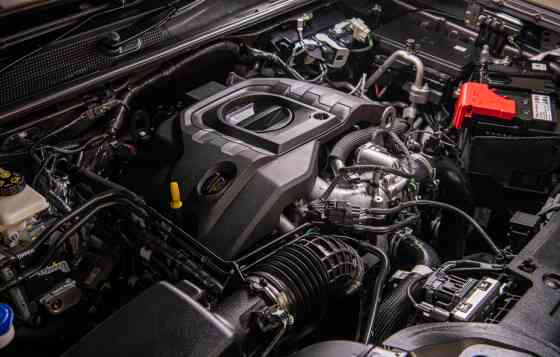
3.0-liter Power Stroke V6 Turbodiesel
Since Ford Australia sources out its Everest and Ranger units from Thailand (same as the Philippines), the biturbo going out of production could definitely have an implication for Ford PH’s plans for the two models going forward.
On one hand, it would be great news for fans of the turbodiesel if Ford PH replaces the biturbo four-cylinder with the Power Stroke V6. But on the other hand, it could also make way for Ford to introduce electrification in the lineup with the 2.3-liter EcoBoost turbo gas PHEV. Best case scenario? Ford PH offers both sometime around 2026.
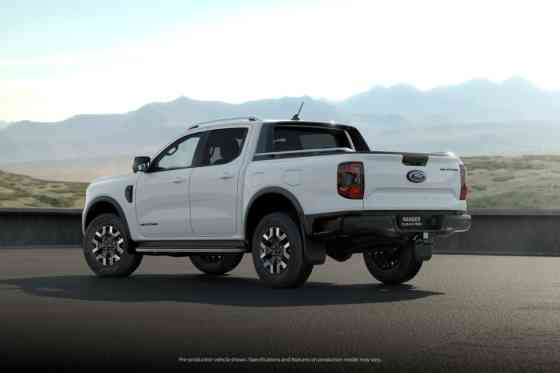
For now, those are the three possibilities that we see going forward, but stay tuned for further updates as 2026 is shaping up to be a big year for major players in the pickup and PPV segments in the country.