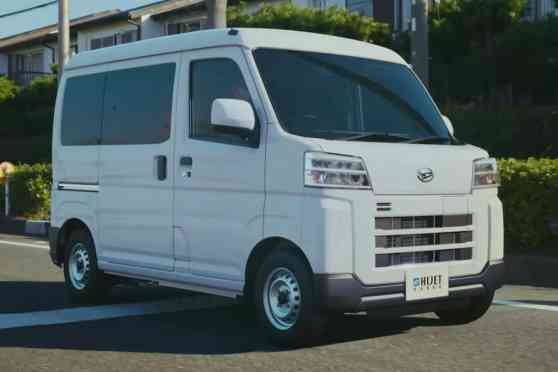
Daihatsu launches electric version of Hijet kei van

e-Hijet Cargo can reach up to 257 km in one charge
Kei vans seem to be really making the headlines these days.
This time, Daihatsu has launched the e-Hijet and e-Atrai EV as its first mass produced battery electric vehicle. The e-Hijet is designed for businesses such as last-mile logistics, while the e-Atrai serves more as a people carrier for both business and personal use.
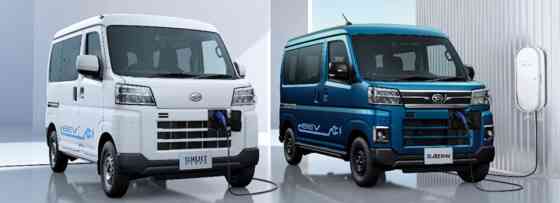
Both models are based from their ICE versions, so exterior features are almost identical except for the charging port that’s placed in front of the kei van. What sets it apart, however, is the propulsion system that Daihatsu calls the e-Smart electric.
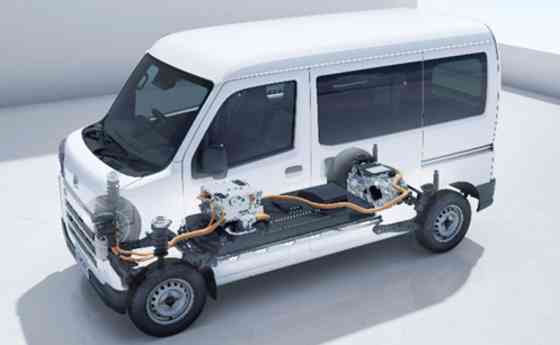
It’s a BEV system developed by Suzuki, Toyota, and Daihatsu to integrate an electric architecture in small vehicle manufacturing. The e-Axle integrates the motor, inverter, and reduction gear on the rear drive axle, while the 36.6 kWh lithium-ion battery is positioned under the floor.
Daihatsu did not disclose power figures for the e-Hijet and e-Atrai, but they announced an EV range of up to 257 km in one charge in WLTC cycle, and a maximum loading capacity of 350 kg. With a 50 kW fast charger, Daihatsu says the batteries can be recharged to 80% in about 50 minutes.
Likewise, it has a V2H or Vehicle to Home function that provides standard external power supply in daily situations or emergencies. There’s a 100V/1500W AC outlet in the vehicle, and an external power supply outlet that can be routed outside the vehicle to provide electricity.
That said, the Daihatsu kei vans are on the high side of things when it comes to cost, along with its twin, the Toyota Pixis. In Japan, the EV versions are almost three times more expensive than its gasoline counterparts. Production will take place at Daihatsu’s plant in Nakatsu, Japan, with monthly combined production of 300 units.