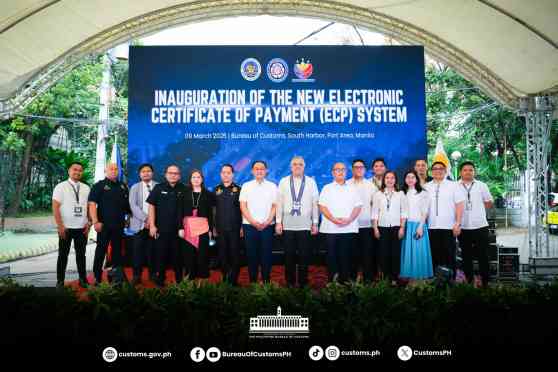
BOC, LTO launch new and improved e-Certificate of Payment System

Enhanced e-CP System rolled out by Bureau of Customs, LTO
The Flood Control Scandal has shed light on several irregularities within the government, including smuggled or under-declared imported vehicles, particularly luxury models that allegedly entered the country with little to no tax paid.
Part of the problem stems from the manual and outdated processing of the Certificate of Payment (CP). Because the system has lagged behind the government’s broader digitalization efforts, it has been vulnerable to manipulation by corrupt individuals. The CP serves as the official proof that an imported vehicle’s customs duties and taxes have been fully paid, allowing it to be released by the Bureau of Customs (BOC) and later registered with the Land Transportation Office (LTO).
To address these vulnerabilities, the BOC, in coordination with the LTO, has formally rolled out the “new and improved” electronic Certificate of Payment (e-CP) System to modernize the process and eliminate opportunities for fraud.
According to BOC, the enhanced platform replaces the previous e-CP process, which relied on manual validation, limited automation, and fragmented data sharing. The new system is a fully automated, real-time platform that directly links the BOC with the LTO.
The BOC also said the upgraded e-CP system significantly reduces processing time, strengthens data integrity, and improves service delivery for both government agencies and industry stakeholders.
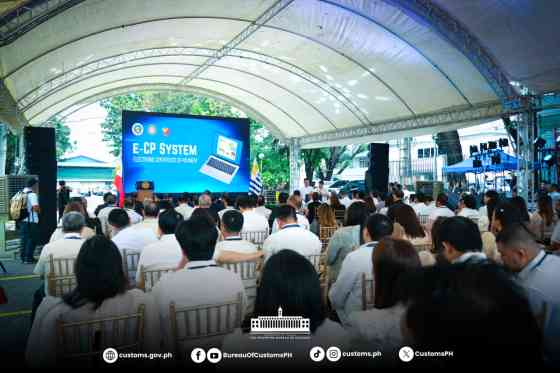
“The new e‑CP System is a clear demonstration of the Bureau’s commitment to modernization and whole‑of‑government collaboration. By automating validation, eliminating redundant processes, and ensuring real‑time data exchange with the LTO, we are making customs transactions faster, more secure, and more transparent for our stakeholders,” said BOC Commissioner Ariel Nepomuceno.
LTO Chief, Markus Lacanilao, expressed support for the initiative, highlighting the importance of digital integration in improving public service delivery.
“For many years, inter-agency coordination relied on manual process in separate systems, but the growing scale of transaction now requires more integrated approaches. The new electronic certificate of payment system is a direction; information that previously required several layers of validation can now move across system more efficiently, allowing agencies to rely on a shared verifiable records—We at the LTO look forward to continuing our cooperation with the BOC as we move forward to a more integrated and modern public service,” Lacanilao said.
The system integrates with the BOC's Electronic‑to‑Mobile System to automatically validate payment records and Single Administrative Document details, enabling faster processing and transmission of information to LTO. It also allows stakeholders to track their e-CP application status in real time while strengthening data integrity through improved validation and audit mechanisms.
The platform is linked to the Land Transportation Management System (LTMS), enabling automatic updates to license plate and vehicle registration records. This closed-loop integration improves accuracy, traceability, and monitoring of imported vehicles, addressing long-standing issues tied to manual reconciliation under the previous system.