BMW has produced its 3 millionth electrified vehicle

A total of 3 million electrified vehicles have rolled out from BMW's production line
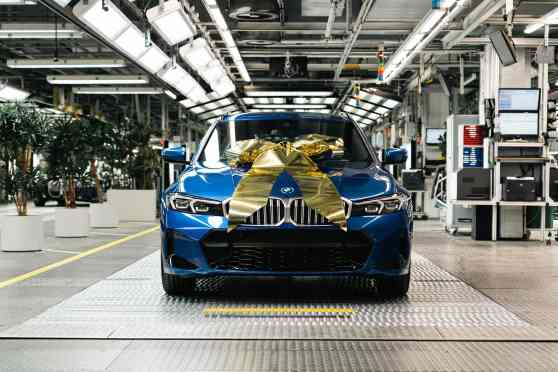
BMW Group’s main plant in Munich saw the 3,000,000th electrified vehicle roll off its assembly line. This milestone vehicle was a Portimao Blue BMW 330e Touring, destined for the UK market. In 2024, the company reported that one in four of its vehicles sold was either a Battery Electric Vehicle (BEV) or a Plug-in Hybrid Electric Vehicle (PHEV). Notably, BMW Group plants produce vehicles with both electrified drive trains and internal combustion engines on the same production lines.
Milan Nedeljković, a member of the Board of Management responsible for Production, explained that the BMW Group’s highly flexible production allows it to respond to customer needs in line with market trends and demand. He added that all plants within their global production network are equipped for electromobility, paving the way for continued growth in this segment.
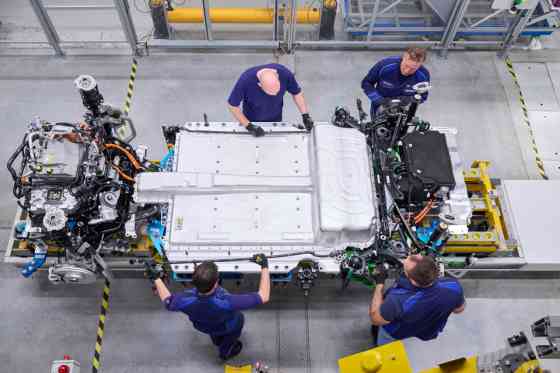
The company began series production of fully electric vehicles in Leipzig in 2013 with the BMW i3. This electric city car was manufactured for nearly a decade at the Leipzig plant, alongside the BMW Group’s first PHEV, the BMW i8. Initially, due to its unique architecture, the BMW i3 was built in a dedicated area for electric cars in Leipzig, separate from the production of vehicles with conventional drive trains.
Since then, the BMW Group has integrated electric cars into production across all its global plants. Many of these plants initially assembled plug-in hybrid models on a single, flexible line alongside diesel and petrol vehicles. Electromobility now accounts for a steadily increasing share of the company’s production, exceeding 25% in 2024, with approximately 3/4 of those vehicles being BEVs. The BMW, MINI, and Rolls-Royce brands have collectively delivered a total of 1.5 million BEVs.
The BMW Group’s global production network is now enabled for e-mobility. The MINI Cooper SE production began in Oxford in 2019, extending the BEV range to the BMW Group’s second brand. The rollout continued from 2020 with the latest generation of e-drives. The BMW iX3 was built in China, while the BMW iX and i4 production ramped up in Dingolfing and Munich in 2021. Within a year, all BMW Group plants in Germany were equipped for fully electric vehicle production. The company remains committed to systematically integrating electrified vehicles into its existing production processes.
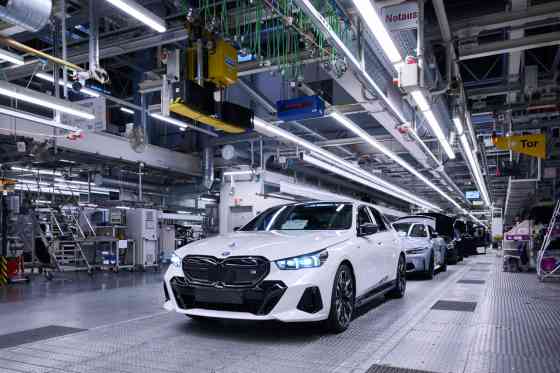
In China, electrification has already been implemented at all plant locations. In the US, Plant Spartanburg is preparing for fully electric vehicle production starting in 2026, while Plant San Luis Potosí in Mexico will add BEV models for the Neue Klasse to its production portfolio in 2027. Both of these facilities already produce PHEV models. The plant in Rosslyn, South Africa, began manufacturing PHEVs in 2024. The BMW Group’s local production sites in Brazil, India, and Thailand are also ready to build electrified vehicles.
The production of electric powertrain components is expanding beyond Germany. Since the BMW i3’s launch, battery modules, high-voltage batteries, and electric motors have been produced in Dingolfing. As part of the production network’s electrification, the Competence Centre for E-Drive Production was established at this site, reaching an annual capacity of over 500,000 e-drives by 2022.
Other locations gradually increased capacity to support the rapid growth in e-mobility. Consequently, fifth-generation high-voltage batteries are now assembled and installed in vehicles in Regensburg, Leipzig, and Spartanburg, in addition to Dingolfing. The expertise gained is now being applied to the sixth generation of e-drives, which will be introduced towards the end of 2025 with the NEUE KLASSE at the new plant in Debrecen, Hungary.