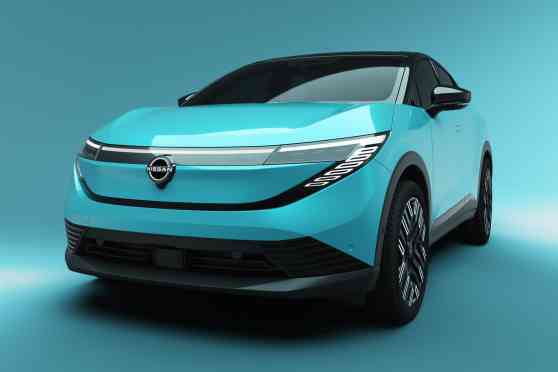
All-new Nissan Leaf EV turns from hatchback to crossover

Third-gen Leaf now uses Ariya’s electric platform
The Nissan Leaf is one of the early pioneers of electric mobility. But since then, the Japanese brand had a challenging time keeping up with newer EVs and has since fallen into financial troubles.
With a new CEO onboard, Nissan is looking to reverse its fortunes with a new, invigorated lineup – and one of those include the all-new third-generation Leaf EV. Indeed, it’s all grown up as it has been reimagined from being a hatchback to a bigger, more upright, and a more aerodynamic efficient crossover.
The reason behind is that the Leaf now sits on Nissan’s modular CMF-EV platform. If that rings any bells, that’s the electric architecture that underpins the Nissan Ariya. For now, all we have is a single picture of the third-gen Leaf as Nissan remains mum about other technical details such as battery size and power outputs.
According to Nissan’s Francois Bailly though, we can now expect a range of up to 600 km on the all-new Leaf – almost three times the range of the current Leaf that we have in the country.
The dead giveaway on the teaser photo is that it’s the first time the Leaf will get 19-inch wheels, while Nissan says it will also have a panoramic moonroof so expect it to come with a lengthy list of standard features once it comes out.
For the North American market, the all-new Leaf will have an integrated NACS charging port so owners can use Tesla’s Supercharger network to charge the EV.
However, Nissan has said the third-generation Leaf will be made at their Sunderland plant in England. While that bodes well for Nissan’s EV efforts in Europe, that could be a cause for concern if they offer the Leaf in the ASEAN market. Once EO 62 expires in the country, the third-gen Leaf could be charged with hefty import duties on top of its pricey shipping cost that would reflect in its sticker price.
Nissan says they will share more details about the all-new Leaf by the middle of the year, as they concentrate their efforts towards offering the EV in the Oceania region by fiscal year 2026.